



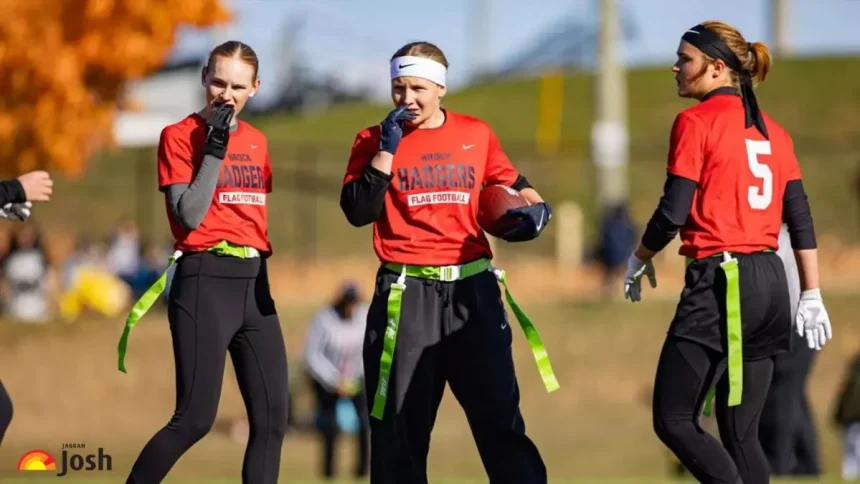
The global sports landscape is in motion, but few developments are as exciting as the rise of Women’s Flag Football. Once seen as a fringe activity with limited reach, this non-contact version of American football is now spreading across continents, breaking barriers, and building a future that’s sustainable, accessible, and driven by passion and participation. With clear growth pathways, expanding competitive structures, and rising visibility, Women’s Flag Football is proving that the sport is here to stay, and it’s redefining how fans, players, and institutions view football beyond traditional formats.
- Breaking Down Barriers: The Accessibility Advantage
- From Grassroots to Global Stage: Women’s Flag Football’s Global Rise
- Connecting Community and Competition: League Growth and Support
- Role Models and Media: Inspiring the Next Generation
- Building a Sustainable Future: What’s Next for Women’s Flag Football
Breaking Down Barriers: The Accessibility Advantage
At the heart of Women’s Flag Football’s global rise is simplicity. The sport requires minimal equipment, just a ball, flag belts, and open space, and its non-contact nature makes it safer and more inviting than tackle football, especially for younger players and beginners. This accessibility has empowered communities from North America to Europe and Asia to embed flag football into school programs, community leagues, and competitive events. Unlike traditional formats that often require extensive infrastructure, Women’s Flag Football can flourish in parks, campuses, and local sports centers, ensuring that geography and finances are less of a barrier to entry.
Participation figures speak volumes. In the United States alone, participation among girls and young women has surged, with hundreds of thousands playing organized flag football at youth and high school levels, and significant year-on-year growth continuing unabated as programs expand across states and age groups.
From Grassroots to Global Stage: Women’s Flag Football’s Global Rise
What began as casual play has quickly matured into competitive structures with genuine depth. National and regional federations, including the International Women’s Flag Football Association, are bridging gaps by organizing tournaments, coaching programs, and training clinics across continents.
International competitions further underline how Women’s Flag Football now operates on a truly global scale. European championships draw national teams from countries like Great Britain, Austria, and Italy, while Asia-Oceania flag football championships in regions such as China and Malaysia showcase the diversity of the sport’s reach beyond its U.S. roots.
Read More

This global footprint paves the way toward even bigger platforms. The announcement of flag football’s inclusion in the 2028 Los Angeles Olympics has been a major catalyst, boosting visibility, funding, and institutional interest worldwide. It’s a moment that’s already influencing strategic decisions by schools, leagues, and federations.
Connecting Community and Competition: League Growth and Support
Leagues and federations are now building structured pathways that embrace both community and elite levels of play. Organizations like the Women’s National Football Conference are expanding nationwide flag tournaments that connect local talent to national platforms, offering women clear routes from amateur participation to high-level competition.
At the collegiate level, momentum is undeniable. The NCAA has recognized Women’s Flag Football as an emerging sport, and institutions are adding varsity programs, from Division I schools to smaller colleges. This not only amplifies competition but also creates educational and scholarship opportunities for athletes who previously had limited athletic pathways open to them.

Even professional teams and foundations are investing in showcases and developmental events that shout confidence in the sport’s potential to evolve and thrive.
Role Models and Media: Inspiring the Next Generation
Growth rarely happens without faces and stories that inspire fandom. Women’s Flag Football has its share of trailblazers, athletes who are transcending stereotypes and becoming global ambassadors for the sport. Figures such as breakthrough international players and national champions are showcasing athleticism, skill, and leadership, proving that flag football demands pace, strategy, and commitment just like any major sport.
Digital media and social platforms play a crucial role here too. Flag football content, from highlights and training drills to personal athlete journeys, generates significant engagement, helping the sport reach audiences that traditional broadcasting alone might miss.
Building a Sustainable Future: What’s Next for Women’s Flag Football
The sustainability of Women’s Flag Football lies not just in participation numbers but in strategic growth models that extend beyond novelty. Its expansion into schools, colleges, and international competitions ensures deep roots rather than temporary spikes. Institutional recognition through bodies like the NCAA and the IOC’s Olympic inclusion commitments are turning momentum into long-term frameworks that can support athletes from first touch to elite competition.
Crucially, Women’s Flag Football’s inclusive ethos, welcoming athletes of all backgrounds, aligns with global trends in sport participation. This inclusivity, coupled with institutional backing, is cementing the sport’s place in a future where women’s sports increasingly command attention, investment, and respect.
Also Read: India at the Winter Olympics 2026 in Italy