Arsenal’s early season charge in the Premier League has been one of the talking points of 2025-26, but Arsenal’s Injury Management narrative has dominated headlines just as much as their position at the top of the table. With a remarkable lead against heavyweights like Manchester City, the Gunners are balancing on a knife-edge, trying to harness their depth while managing an ever-growing list of unavailable stars. Across domestic and European fronts, the way Mikel Arteta navigates fitness crises could well decide whether Arsenal lift silverware this season or watch the margins slip away.
Injury Chaos Behind the Headlines
For a club that has spent heavily to build real quality across the squad, Arsenal’s Injury Management has been an unavoidable subplot this campaign. Despite investing in reinforcements across the pitch, the Gunners have experienced a staggering number of setbacks, with figures suggesting close to 93 separate injuries since the start of last season, a toll that few clubs at the summit of the Premier League endure.
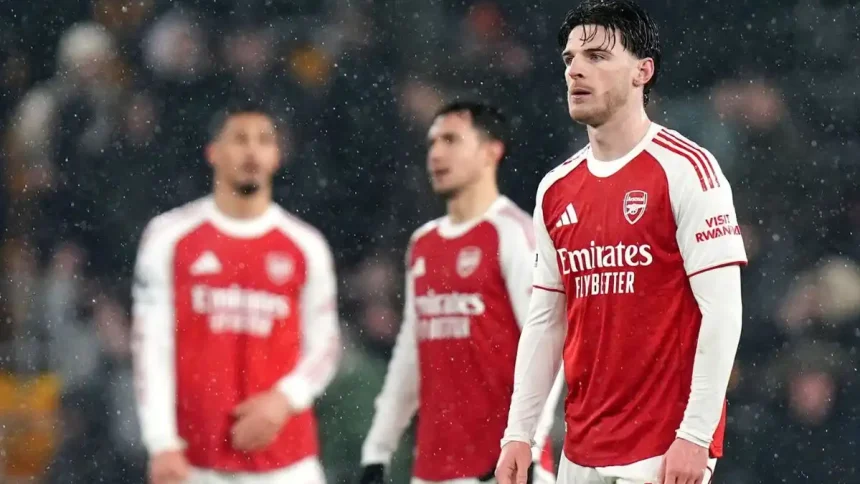
Star names such as Bukayo Saka, Martin Ødegaard, Kai Havertz, Gabriel Jesus and Declan Rice have all missed significant chunks of the season, forcing Arteta to dig deeper into his roster than he might have hoped. Kai Havertz’s muscular setback, for instance, threatens multiple matches including pivotal fixtures while others like Saka and Merino have seen their rhythm interrupted by fitness issues.
Depth on Paper, Strain on the Pitch
“I think we’ve got more options than before,” said one insider commentary on Arsenal’s squad composition and indeed Arteta’s summer signings have been intended to beef up depth. However, Arsenal’s Injury Management is testing whether that depth can truly withstand the rigours of competing on four fronts. Across the Premier League and the Champions League, rotation is essential: maintaining energy, avoiding burnout and limiting the risk of muscle fatigue have all been pivotal talking points this season.
Coming into the season, Bukayo Saka himself highlighted that Arsenal’s strength in depth could be the very factor that carries them to a long-awaited Premier League title. But the reality of repeated setbacks and positional knock-ons, weakening one area only to expose another, has meant that squad rotation has often been more reactive than ideal.

Tactical Adaptations and Unexpected Roles
One of the more curious side-effects of Arsenal’s Injury Management has been how Arteta has reimagined his tactical approach. With his preferred forward options knocked out at times, players like Mikel Merino have been deployed in unorthodox positions, even leading the line when conventional strikers were unavailable. Such adaptability has been a testament to the training ground preparation and collective mentality, but also underlines how frequently the team has been reshuffled due to fitness headaches.
Defensive recalibrations have been just as common. Deals on both flanks and central areas have seen tactical tweaks, with long spells missed by William Saliba or Ben White prompting partners to shoulder added responsibility. Each absence forces slight shifts in the way Arsenal attack and defend, pushing junior or fringe players into high-stakes roles.
The Physical Toll of a Crowded Calendar
A central concern in the ongoing Arsenal’s Injury Management discussion has been the sheer pressure of the calendar. A packed fixture list, led by intense mid-week matches and international breaks, has stretched player load to its limits. Manager Mikel Arteta has himself acknowledged that fitness issues can create a “dangerous circle,” where the loss of one player compels heavier workloads for others, thus increasing the risk of additional injuries.
Read More
In response, Arsenal’s sports science and medical staff have been continuously analysing training minutes and match recovery schedules, often opting for limited training before games in an effort to maximise freshness. However, with fixture congestion showing no signs of easing, the optimised recovery protocols are under constant pressure in the push for consistency.
When Luck and Planning Collide
There’s an argument in fans’ circles that some injuries are simply down to bad luck, hamstring pulls, knocks gained in the dying moments of games, or contact injuries that no amount of precaution could prevent. Yet when those setbacks cluster in the same positional zones, such as multiple forwards out at once, it magnifies the strain on Arsenal’s Injury Management systems and squad balance overall.
What the Gunners have managed so far is remarkable: remaining atop the Premier League and progressing in cup competitions without a settled XI for weeks at a time is no small feat. But as the run-in approaches and games become more consequential, every selected bench, rotated midfield and adapted attack will be scrutinized under the lens of Arsenal’s ability to manage injuries and maintain peak competitiveness.
Also Read: How Arsenal Made History in the First FIFA Women’s Champions Cup