



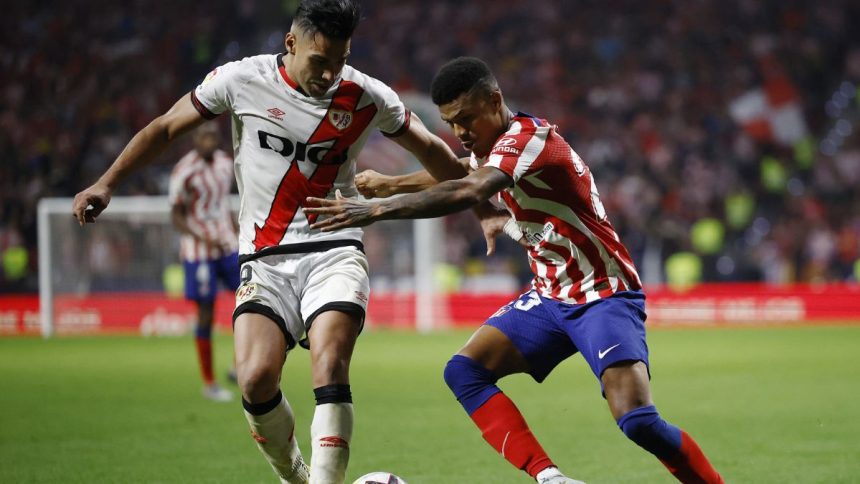
The night Atlético Madrid were outplayed by Rayo Vallecano felt like more than just a bad result. It was a tactical jolt, a reminder that margins in modern football are ruthless. For Atlético Madrid, the defeat forced a recalibration of ideas, roles, and game management. What followed was not a radical reinvention, but a sharp evolution that has subtly reshaped how Atlético Madrid compete across domestic and European fixtures.
- Atlético Madrid After Rayo Vallecano: A Moment of Tactical Reckoning
- Diego Simeone and Atlético Madrid’s Shape Shift
- Atlético Madrid’s Midfield Rebalance: Control Over Chaos
- Atlético Madrid in Transition: Faster, Cleaner, Deadlier
- Defensive Line Adjustments in Atlético Madrid’s New Blueprint
- Atlético Madrid’s Game Management in La Liga Battles
- Why Atlético Madrid’s Tactical Evolution Matters?
Atlético Madrid After Rayo Vallecano: A Moment of Tactical Reckoning
The loss to Rayo Vallecano exposed familiar fault lines. Atlético Madrid struggled to progress the ball cleanly, were second best in midfield duels, and looked predictable in buildup. Rayo’s aggressive pressing disrupted Atlético Madrid’s rhythm, forcing rushed long balls and isolating the forwards. For a side built on control without excess possession, that imbalance was glaring.
In response, Atlético Madrid acknowledged a simple truth. Sitting deep and waiting for transitions was no longer enough against teams brave enough to press high and compress space. The tactical blueprint had to stretch, not break.
Diego Simeone and Atlético Madrid’s Shape Shift
Under Diego Simeone, Atlético Madrid have always been adaptable, but post Rayo, the tweaks became more visible. The classic 5-3-2 was refined into a more fluid structure. In possession, it often resembled a 3-2-5, with wing backs pushing higher and central midfielders staggering their positions.
This evolution allowed Atlético Madrid to create overloads wide while maintaining defensive rest. Instead of retreating into a compact block immediately after losing the ball, Atlético Madrid began holding a higher line, enabling quicker counter pressing. The emphasis shifted from reactive defending to controlled aggression.
Read More

Atlético Madrid’s Midfield Rebalance: Control Over Chaos
One of the most significant changes was in midfield dynamics. Against Rayo Vallecano, Atlético Madrid’s central areas were overrun. Since then, Simeone has demanded better spacing and clearer roles. The holding midfielder now drops earlier between the center backs during buildup, creating numerical superiority against pressing traps.
This adjustment has helped Atlético Madrid circulate the ball faster and avoid being funneled into wide dead ends. The interiors have been instructed to receive on the half turn, breaking lines rather than recycling possession endlessly. The result is a midfield that dictates tempo without abandoning Atlético Madrid’s trademark intensity.
Atlético Madrid in Transition: Faster, Cleaner, Deadlier
Transitions have always been Atlético Madrid’s weapon, but the execution has been refined. Post Rayo Vallecano, the first pass after regain has become more vertical and purposeful. Instead of defaulting to the channels, Atlético Madrid now look for central progression before releasing wide runners.

This has reduced reliance on hopeful crosses and increased the quality of chances created. Atlético Madrid’s forwards are receiving the ball closer to goal, with midfield support arriving quicker. The spacing between units has tightened, ensuring that counter attacks do not become isolated sprints but structured waves.
Defensive Line Adjustments in Atlético Madrid’s New Blueprint
Defensively, Atlético Madrid have inched their line higher. It is a calculated risk, but one designed to compress the pitch and reduce the running burden on midfielders. After the Rayo Vallecano setback, Simeone emphasized compactness between lines rather than sheer depth.
The back three now step into midfield zones more confidently, especially against teams deploying a lone striker. This proactive defending has allowed Atlético Madrid to regain possession earlier and sustain pressure for longer spells. The defensive identity remains intact, but it is less passive and more assertive.
Atlético Madrid’s Game Management in La Liga Battles
In La Liga, game management often defines success. Atlético Madrid have sharpened this aspect since the setback. When leading, the team no longer collapses into a low block immediately. Instead, they maintain a medium press, forcing opponents to build under stress.
This approach has reduced late game volatility, a problem that surfaced in matches like the Rayo Vallecano defeat. Atlético Madrid now dictate where the game is played in the final phases, slowing tempo through controlled possession rather than constant clearances.
Why Atlético Madrid’s Tactical Evolution Matters?
The evolution after the Rayo Vallecano loss highlights a broader trend in Atlético Madrid’s journey. The club is balancing its defensive heritage with modern positional demands. Press resistance, fluid shapes, and proactive transitions are no longer optional at the elite level.

Atlético Madrid have not abandoned their DNA. They have refined it. The setback served as a tactical mirror, forcing Simeone and his squad to confront limitations and adjust without losing identity. In a league where even mid table sides press with conviction, Atlético Madrid’s willingness to evolve may prove decisive over the long grind of the season.
Also Read: Girona vs Barcelona: Player Ratings And Match Analysis From Montilivi