


Cricket Kenya, the official cricket board of Kenya, was once a beacon of promise in African sport; however, it now stands as a tale of disappointment, power politics, and repeated betrayals, reflecting the persistent shadow of greed and administrative chaos.
In this report, we bring you some exclusive insights, exposing the questionable and damaging decisions taken by Cricket Kenya, that has pushed the entire cricket scene of the country into turmoil.
Glory Lost: The Rise and Fall of Cricket Kenya
There was a time when Kenya was basking in the glory of cricketing heritage. Back in 2003, the national cricket team of Kenya left the cricketing world in shock by reaching the semi-finals of the World Cup. Captained by the likes of Steve Tikolo and Thomas Odoyo, Kenya scripted history by becoming the first non-Test-playing nation to achieve such a feat, offering a glimpse of Africa’s potential on the world stage.
Even after reaching the heights, Cricket Kenya, instead of building on that foundation, has ended up becoming a topic of joke, thanks to broken promises, chronic mismanagement, and self-serving administrators.
Two decades after that iconic feat, Cricket Kenya is surrounded by scandals and controversies surrounding its governing body.


Promised Leagues and Shattered Trust:
In August 2024, Cricket Kenya announced a landmark moment in the history of this sport in the nation. In partnership with SA Event Worx, Cricket Kenya made the biggest announcement to launch the Kenya Blaster League (KBL).
The franchise-based T20 tournament was touted to become as great as the Indian Premier League. It was marketed and designed to inspire the local talent of Kenya, engage communities, and help cricket grow.
Hemant Sharma, founder of SA Event Worx, and Manoj Patel, then-chairman of Cricket Kenya, jointly unveiled the league to considerable fanfare. Local and international media picked up the story, stakeholders began circling, and expectations soared.
Read More



But optimism quickly gave way to chaos. Within weeks, Cricket Kenya reversed course, denying it had ever formally sanctioned the tournament. This denial left SA Event Worx reeling, financially and reputationally, and eventually, the company filed a legal case against Cricket Kenya.
Manoj Patel, who had announced the league, was soon removed from his position as chairman. His firing from the cricket board was framed as the fallout from the mounting legal storm and boardroom dissent.
What could have been a catalyst for Kenyan Cricket became yet another example of administrative negligence and opportunism.
The CKT20 League – A Sequel of Confusion
Shockingly, while the legal battle with SA Event Worx was still going on, Cricket Kenya repeated the same stunt. In mid-2025, Cricket Kenya – this time in partnership with AOS Sport Tournaments, a Dubai- and India-based company- announced to launch of the Cricket Kenya T20 League (CKT20).
The announcement was grand. A five-year investment worth more than $2 million was pledged, franchises were promised, and the tournament was scheduled to kick off in September 2025. Legends from Kenya’s 2003 World Cup squad were honored at the launch ceremony, heightening the sense of national revival. Local and international players began preparing, sponsors lined up, and the cricketing public finally dared to hope again.

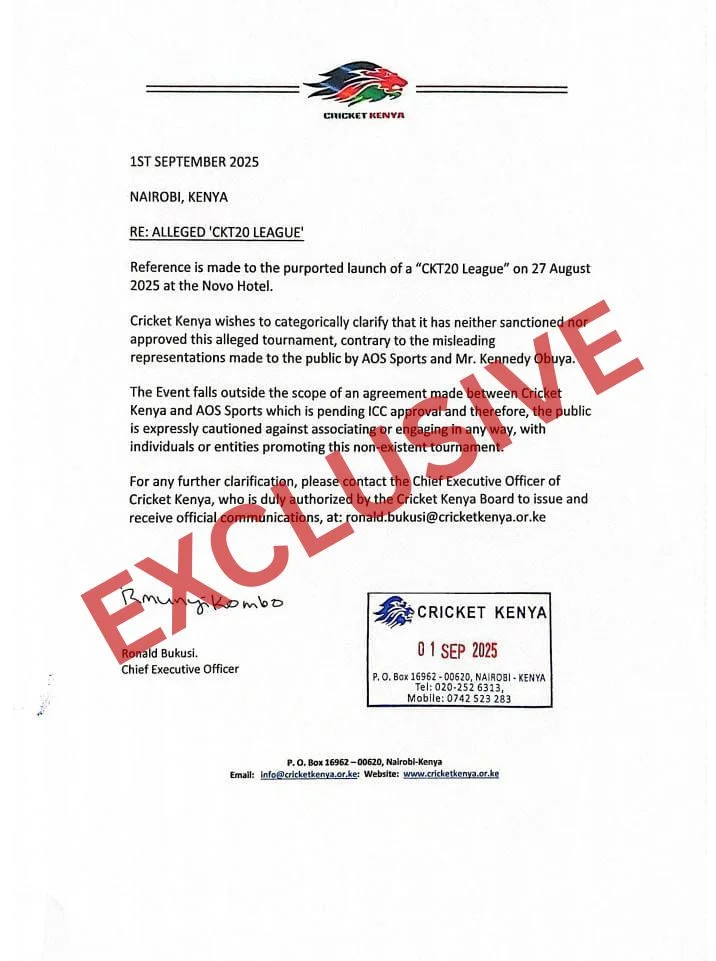
But déjà vu struck. Just weeks before the league’s debut, Cricket Kenya issued an official statement denying any involvement, insisting that the event was unsanctioned and warning stakeholders against associating with AOS Sports. Signed by CEO Ronald Bukusi, the communiqué claimed the board had been misrepresented by external promoters – even as clear evidence of formal agreements and promotional campaigns contradicted the denial.
People who were charged by BCCI and law enforcement agencies under severe corruption allegations were seen hobnobbing with ex ex-chairman and other officials.
The fallout was immediate. Foreign investors, local players, and fans were left stranded in limbo, once again betrayed by the very body tasked with safeguarding the sport.
Legal Chaos, Boardroom Intrigue, and Firings
These league scandals were not isolated blunders; they were symptomatic of a deeper malaise within Cricket Kenya. The firing of Manoj Patel after the KBL fiasco was preceded by a board vote of no confidence, highlighting the instability and infighting that have long plagued the institution.
The chaos wasn’t confined to board politics.
In August 2024, former India cricketer Dodda Ganesh was unveiled as Kenya’s head coach, only to be dismissed just a month later on grounds of “procedural irregularities.” The sacking underscored Cricket Kenya’s lack of professionalism and further undermined its credibility internationally.
Such episodes illustrate an organization caught in perpetual crisis – unable to maintain stable leadership, follow due process, or honor its commitments.
Impact: The Collapse of Kenyan Cricket
The cost of these repeated betrayals has been devastating:
Loss of trust: Sponsors, foreign investors, and local communities have seen their faith in Cricket Kenya eroded. After two successive league fiascos, potential partners are wary of associating with the board.
Declining performances: With unstable funding, revolving-door coaching, and little grassroots investment, Kenya’s men’s and women’s teams have slid down the international rankings. Once a World Cup semi-finalist, Kenya now struggles even in Africa’s regional qualifiers.
Damaged reputation: Internationally, Kenya has become a cautionary tale of how governance failure can cripple a promising cricketing nation. Administrators elsewhere now cite Kenya as an example of what not to do.
The human cost is equally stark. For players, these failed leagues represented missed chances for exposure, income, and career progression. For fans, they symbolized broken promises and dashed dreams.
Media Silence and Public Outcry
Local media have often downplayed the scandals, but players and fans have been outspoken, accusing administrators of “ruining cricket in Kenya.” International outlets, too, now cite Kenya as a warning of how governance failures can cripple a once-promising sport.
The Path Forward
Kenya’s cricket crisis is rooted not in lack of talent but in corruption and mismanagement. To recover, the board must undergo independent audits, embrace transparent governance, and prioritize grassroots development. Without reform, Kenya risks being remembered not for its 2003 heroics, but for decades of betrayal. Yet hope lingers.
ALSO READ: Free Fire Redeem Codes: Are They Really Worth It?

