

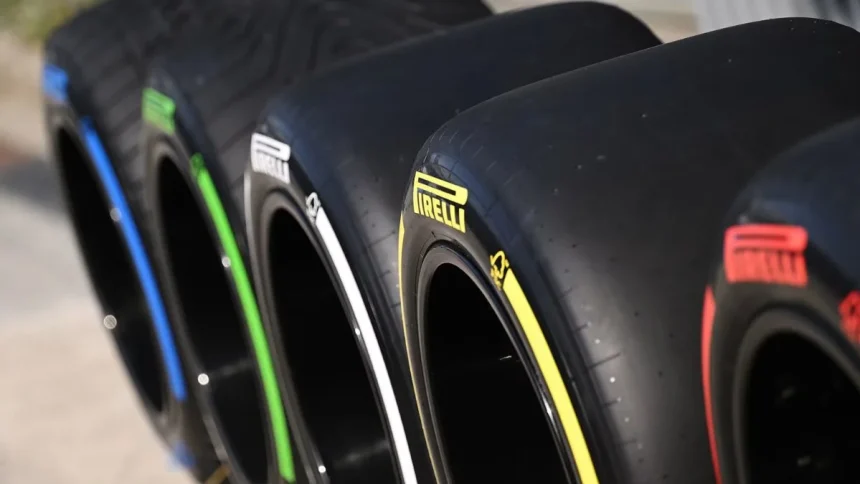
When it comes to Formula 1 racing, tyres are way more than just rubber wheels. They play a key role in how fast a car goes, how it handles, and ultimately, how the race unfolds. Understanding F1 tyres, the types, compounds, and why teams choose them, gives fans a whole new level of appreciation for the sport. Let’s tell you all about the world of F1 tyres so that anyone can get it!
The Basics: Types of F1 Tyres
There are three main types of F1 tyres used in the race, depending on the weather and track conditions:
Slick Tires: These have a smooth surface with no grooves and are used when the track is dry. Slicks provide the best grip and the fastest lap times because of maximum contact with the track.
Intermediate Tires: These F1 tyres are used when the track is damp or there’s light rain. They have some grooves to help clear water and prevent the car from sliding.
Wet Tires: Also called full wets, these tyres have deep grooves to handle heavy rain, making it safer to race on very slippery, wet tracks.
Read More


What Are F1 Tyre Compounds?
F1 Tire compounds refer to how soft or hard the rubber on the tyre is. In Formula 1, softer tyres provide more grip but wear out quickly, while harder tyres last longer but offer less grip. Teams have to pick the right balance between speed and durability depending on the race.
Pirelli is the official supplier of F1 tyres, offering six different dry compounds labelled from C1 to C6:
- C1 is the hardest compound with the longest durability, ideal for tracks that are tough on tyres.
- C6 is the softest, giving the best grip but lasting for much less time on the track.
For each race, Pirelli selects three of these compounds, hard, medium, and soft, based on the track type and weather forecast. For example, street circuits like Monaco favour softer tyres because the roads are smoother and less abrasive, while faster circuits like Silverstone require harder tyres to cope with more stress.
Read More

F1 Tyre Colours and What They Mean
To make it easy for fans and teams to identify F1 tyres during a race weekend, each compound type has a unique colour:
Red: Softest tyres (fastest but wear out quickly)
Yellow: Medium tyres (balanced grip and durability)
White: Hardest tyres (long-lasting but slower on the track)
For wet-weather tyres:
Green: Intermediate tyres
Read More

Blue: Full wet tyres
Why Tire Choice Matters in F1
F1 Tires can make or break a race. Using softer tyres means the car will be faster for a short time, which is great for qualifying laps to get pole position. However, during the race, softer tyres wear out quickly, forcing more pit stops.
Harder tyres last longer but don’t offer great grip, so drivers have to manage their lap times carefully. Medium tyres offer a middle ground, often used for the first part of the race before switching to softer or harder compounds.
Teams and drivers must strategise when to switch tyres during pit stops to maximise performance and minimise time lost. Unexpected rain or changing track conditions can also throw a wrench into even the best-laid F1 tyre plans.
Fun Fact: Drivers Must Use Two Different Dry Compounds
In most races, F1 rules say drivers must use at least two different dry tyre compounds during the Grand Prix, unless the race is affected by rain. This rule adds a strategic layer, as teams weigh the pros and cons of each compound and pick the best timing to switch.
So, it’s not just about driving fast; it’s about choosing the right tyres at the right time to get that crucial edge. From slicks to wets, and hard to soft compounds, every F1 tyre has its role. So next time while watching a race, keep an eye on those colourful tyres and how they change the game.
Also read: Apollo Tyres Replaces Dream11 As Team India Sponsor