

Football Nutrition: Best Strategies Before, During, And After Matches
Football has evolved into one of the most physically demanding sports in the world. Players are expected to perform at high intensity for 90 minutes, often multiple times a week, leaving very little time for recovery. Training and tactics remain crucial, but in modern football, nutrition has become just as important for success.
What players eat and drink before, during, and after a match can directly affect their performance and recovery. With so many opinions and theories around football diets, it is essential to focus on scientifically proven methods.
To address this, a UEFA panel of experts, including FC Barcelona nutritionist Dr. Antonia Lizarraga and other leading scientists, doctors, and coaches, published official guidelines in the British Journal of Sports Medicine. These recommendations provide clear strategies for nutrition at every stage of a match.
Nutrition in the Days Before a Match
Importance of Carbohydrates
Carbohydrates are the main source of fuel for footballers, especially for high-intensity movements such as sprints, tackles, and quick changes of direction. To ensure peak performance, players are advised to maximize their glycogen stores in the days leading up to a game.
According to experts, athletes should consume 6-8 grams of carbohydrates per kilogram of body weight per day. For an average 70 kg player, that equals 420-560 grams of carbohydrates daily. Foods such as pasta, rice, bread, potatoes, and fruits are the best sources. For example:

- One plate of boiled rice = about 60 grams of carbs
- One banana = about 30 grams of carbs
- Two slices of bread = about 25 grams of carbs
Sports drinks, bars, or carbohydrate supplements can also help players reach their target intake, especially when matches are played close together.
Hydration Before Kick-off
Hydration is equally important. Players should monitor their body weight, urine color, and thirst levels to ensure they are well-hydrated before the match. Simply drinking when thirsty may not be enough. Instead, teams often design individual hydration plans based on each player’s sweat rate. This approach ensures that athletes step onto the pitch in their best possible condition.
Pre-Match Nutrition
Carbohydrate-Rich Meals
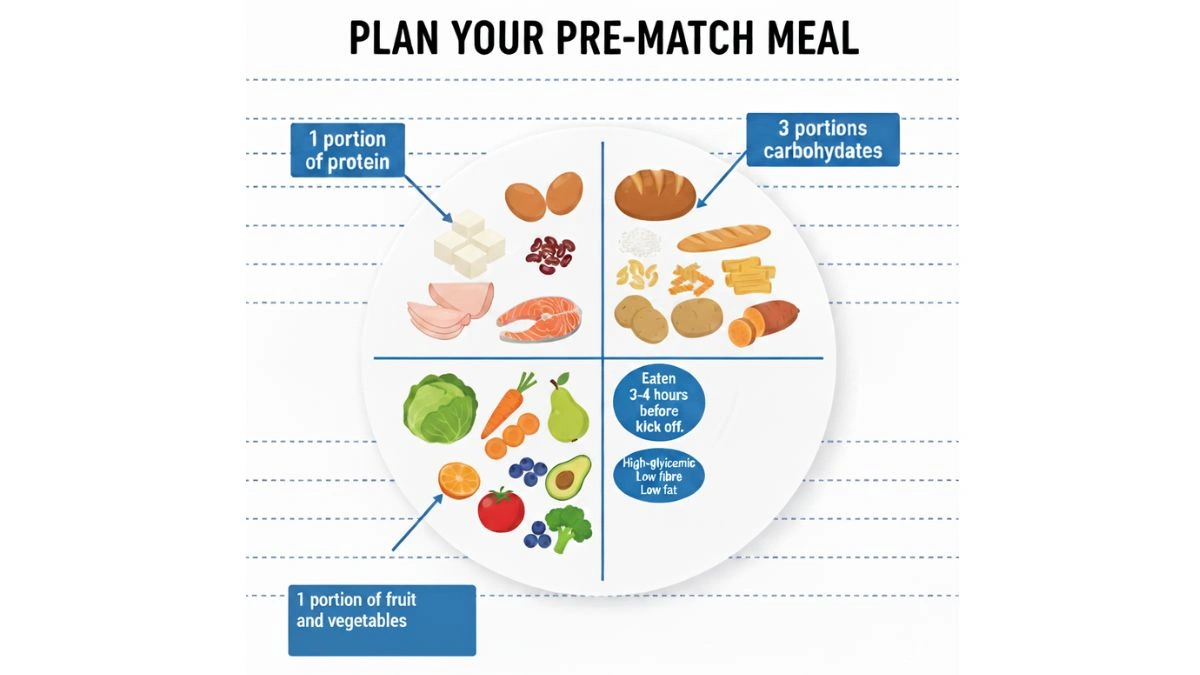
On match day, carbohydrate intake remains a priority. Experts recommend continuing with 6-8 g/kg of body weight and having a carbohydrate-heavy meal 3-4 hours before kick-off. For a 70 kg athlete, this means 70-210 grams of carbs at this meal. Examples include pasta, rice, bananas, and bread.

This meal should be easy to digest and familiar to the player, avoiding new or heavy foods that might cause stomach problems. The aim is to maximize liver glycogen, which naturally drops overnight.
Pre-Match Hydration
Players also need to arrive at the game fully hydrated. The guideline is 5-7 mL of fluid per kilogram of body weight in the 2-4 hours before kick-off. For a 70 kg footballer, this equals roughly 500 mL of water.
Nutrition During the Match
Carbohydrate Intake
Even with good preparation, glycogen stores can run low during a 90-minute match. That is why taking carbohydrates during the game is essential. Experts recommend:
- 30-60 grams per hour during the match, or
- 60 grams before each half
Examples:
- 1 litre of isotonic sports drink = about 60 grams of carbs
- 1 energy bar (60 g) = about 40 grams of carbs
Some players may experience stomach discomfort from eating or drinking too much during games. In these cases, carbohydrate drinks or gels are preferred. Interestingly, even just gargling a carbohydrate drink without swallowing can activate brain receptors and improve focus and energy levels.
Hydration in Matches
Sweat rates vary widely between players, from 0.5 to 2.5 litres per hour. Experts recommend avoiding dehydration that results in a loss of more than 2-3% of body weight. At the same time, drinking too much should be avoided as over-hydration can cause discomfort and affect performance.
Read More

Clubs often test these strategies in training sessions or less important matches, allowing players to find the most effective routine before major competitions.
Post-Match Nutrition
Replenishing Carbohydrates
Recovery begins immediately after the final whistle. The priority is to quickly replace lost glycogen. Players should aim for 1 g/kg of carbohydrates per hour for the first 4 hours. For a 70 kg footballer, that means 70 grams of carbs each hour. Sports drinks, fruits, rice, and pasta are all good options.
When matches are played late at night, this process can be more difficult, so extra focus is required to continue with carbohydrate-rich meals the following day.
Protein for Muscle Recovery
Carbohydrates are not enough on their own. Players also need 20-25 grams of protein every 3-4 hours after exercise to repair and build muscles. Examples:
- 100 g of chicken breast
- 500 mL of milk
This combination of carbs and protein ensures that players recover faster and are ready for the next training session or match.
Other Helpful Nutrients
Research also highlights the benefits of:
- Polyphenols (e.g., from cherries): may reduce inflammation and improve recovery.
- Antioxidants (vitamin C, vitamin E): can lower oxidative stress. However, they should be used carefully since too many antioxidants may reduce the body’s natural adaptation to training. In periods with frequent games, they can be beneficial to speed up recovery.
Nutrition is a vital part of football performance. Eating the right foods and drinking enough fluids before, during, and after matches can make a significant difference to a player’s energy levels, focus, and recovery.
- Before a match, the focus is on carbohydrate loading and proper hydration.
- During the game, athletes must maintain energy levels with sports drinks, gels, or bars, while carefully managing hydration.
- After the final whistle, replenishing glycogen and consuming proteins are key to recovery and preparation for the next challenge.
By following expert-backed strategies, footballers can optimize their performance and stay at their best throughout the season.
FAQs
Q1. Why are carbohydrates so important for footballers?
A. Carbohydrates are the main energy source for high-intensity actions like sprinting, tackling, and dribbling. Without enough carbohydrates, players fatigue faster and struggle to perform consistently throughout a match.
Q2. How much water should a footballer drink before a match?
A. Experts recommend 5-7 mL of fluid per kilogram of body weight in the hours before a match. For a 70 kg player, this equals about half a litre of water.
Q3. Can players eat during matches?
A. Yes. While eating solid food can be uncomfortable, players often take carbohydrate gels, energy bars, or sports drinks. These provide 30-60 grams of carbs per hour to maintain energy levels.
Q4. Why is protein needed after football matches?
A. Protein is essential for muscle repair and recovery. After matches, players should aim for 20-25 grams of protein every few hours to rebuild muscles and prepare for the next game.
Q5. Do antioxidants help football recovery?
A. Antioxidants like vitamin C and E can reduce oxidative stress and speed up recovery. However, if taken in excess, they may limit training adaptations. They are best used during busy schedules with back-to-back matches.
Also Read- The Role Of Recovery In Modern Football: Ice Baths, Cryotherapy, And More