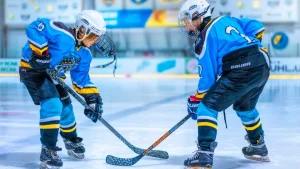

Hockey Canada, the Western Hockey League, and Western Canada’s Junior A leagues have all made significant strides towards hockey growth.
On Thursday, Hockey Canada announced that the board of directors had approved a Western Canadian Development Model (WCDM) pilot project for the 2024-25 season.
The idea provides Western Canadian players with more choice and flexibility by prioritising their requirements both on and off the ice. It also allows athletes to develop at a level that is appropriate for their ability level.
Enhanced Player Flexibility and Choice
“The unity between Hockey Canada and the ten organisations that led the development of the pilot project has never been stronger, and we expressed our thanks to the Members and leagues for their tremendous work that led to today’s announcement,” said Pat McLaughlin, Hockey Canada’s chief operating officer and executive vice-president of strategy.
“We must all continue to grow to suit the requirements of Canadians who want to engage in our National Winter Sport in a system that prioritises athlete development and safety on and off the rink.
Read More

WHL Rule Book Adoption by Junior A Leagues
“We expect to see higher quality competition on the ice, all the way up to the National Team level when Canada is competing internationally in the years to come. This is because we are expanding flexibility for junior hockey players and families in Western Canada.”
Representatives from the following organisations are involved in the project: the WHL, Hockey Alberta, the Alberta Junior Hockey League, Hockey Saskatchewan, the Saskatchewan Junior Hockey League, Hockey Manitoba, the Manitoba Junior Hockey League, and the Kootenay International Junior Hockey League.
Among the modifications, all Hockey Canada-sanctioned Junior A leagues will follow the WHL rule book, except a few exceptions affecting equipment, television, video goal judges, and major penalties.

Protective Equipment Regulations
Fighting in the Western Junior A leagues will continue to adhere to Hockey Canada’s rule, which states that any player who fights will receive a major penalty (five minutes) and a game punishment.
Additionally, all athletes above the age of 18 will be able to wear half-face protection. Individuals under the age of 18 must continue to wear full facial protection.
Detailed Rule Changes for 15- and 16-Year-Olds
There are also a few modifications that will provide 15- and 16-year-old youngsters more flexibility in their development in the WHL.
Fifteen-year-old affiliated players will now be allowed to play up to ten WHL games, the same as 16-year-olds. Previously, 15-year-olds were only allowed to play five games in the league.
WHL clubs will also be authorised to dress two 15-year-old players in the same game if they are unable to dress a complete squad, with a roster limit of nine by January 10. Previously, teams could only have five players on their roster before the deadline.
Statements from Hockey Canada Officials

“It allows teams to arrange their rosters slightly differently,” Rebels general manager and owner Brent Sutter said.
Read More

“You were constantly under pressure earlier because you could only get them in for five games. If you find yourself in a situation involving injuries and, in many cases, availability, such as when your team is not playing. It’s not unusual that they hold the kids behind until the middle of February, but once the playoffs begin, it’s difficult to pull them out.”
Special Status Players and Game Eligibility
In addition, WHL teams will be able to choose one 16-year-old player who, if returned to Junior A, the CSSHL, or the U18 squad, will be eligible to play 15 games in the WHL.
Finally, if one of the four pilot members grants a 12-, 13-, or 14-year-old player special status to play in an advanced age category, the player will be allowed to play up to 34 games in the Western Hockey League. This is dependent on whether the player is considered fit to continue with special status after an evaluation.
Future Implications of the Pilot Project

This implies that any player who came up via minor hockey but was not given or applied for special status by Hockey Canada is permitted to play up to 34 games in the league.
“I believe this increases roster flexibility and allows you to pull yourself out of bad situations when you’re down guys like we were this year. “In March, we were down to four defencemen and fighting for a playoff spot,” Sutter noted.
“We couldn’t use any players since they were in playoffs, and the kids simply weren’t available to us. You now have additional availability, especially during emergencies.
“What happens down the road I believe this is why it is referred to as a pilot project: they want to test how it works over the first year. They’ll reevaluate the following season.”
Also Read: Paris Olympics 2024: Know The 5 Debutants In Indian Hockey Squad