
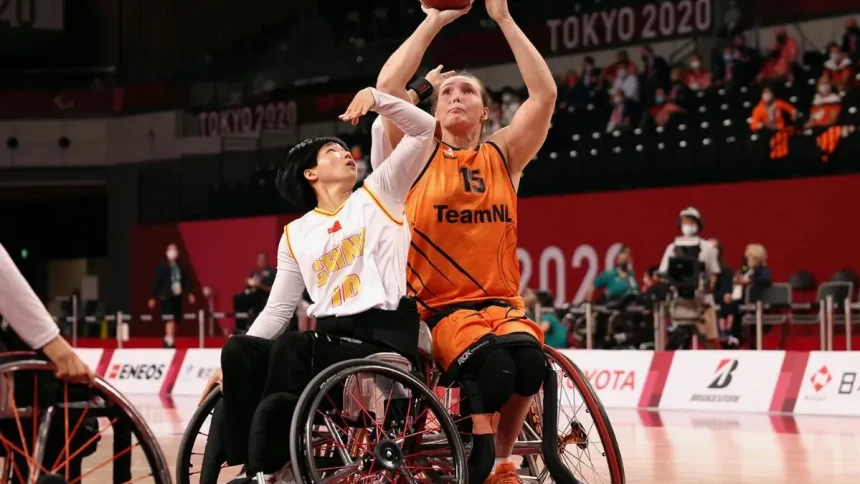
At its core, the Paralympic Movement is more than an elite sport, it’s a celebration of human resilience, a reshaping of identity, and a resounding voice for inclusivity in a world still learning to look beyond disability to ability. From once being a small rehabilitation event to growing into one of the most powerful global sporting phenomena, the Paralympic Movement stands today not just as a competition but as a cultural milestone that challenges perceptions, inspires millions, and reshapes lives.
- Roots of Resilience: From Rehabilitation to a Global Force
- Identity in Motion: Sport as a Catalyst for Self and Social Change
- Redefining Public Narratives: Shifting Societal Attitudes
- Inclusion Beyond Sport: Advocacy, Rights, and Global Movements
- Innovation, Technology, and Competitive Excellence
- Community, Representation, and a New Sporting Culture
Roots of Resilience: From Rehabilitation to a Global Force
The seeds of the modern Paralympic Movement were planted in 1948 when Dr. Ludwig Guttmann organized rehabilitative sports for World War II veterans with spinal injuries in Stoke Mandeville, England. What began with archery and camaraderie evolved into the first Paralympic Games in Rome in 1960, a modest gathering of 400 athletes from 23 countries. Over the following decades, the movement expanded rapidly, pushing athletes to compete with elite intensity and providing a stage for sporting excellence that demanded resilience both on and off the field.
Through each iteration of the Games, athletes proved that their disabilities did not define their limits, instead, their performances reshaped global understanding of athleticism. This groundwork positioned the Paralympic Movement as a beacon of empowerment and competitive spirit.
Identity in Motion: Sport as a Catalyst for Self and Social Change
For many athletes within the Paralympic Movement, sport is not just competition, it is identity. Sport becomes the forum through which individuals construct and express who they are beyond labels, impairments, or expectations. Athletes frequently describe how involvement in para sport gave them purpose, community, and confidence, a profound shift that influences lives far beyond the stadium.
This isn’t simply anecdotal. Research shows that athletic identity among Paralympians is deeply intertwined with self-worth and life narratives, giving them psychological strength that resonates in everyday life and public representation. Such identity formation is rooted in years of dedication, training, and community-building that the Paralympic Movement facilitates.

Redefining Public Narratives: Shifting Societal Attitudes
The global impact of the Paralympic Movement has never been more evident than in public perception. Surveys conducted after the Paris 2024 Paralympic Games revealed dramatic shifts in how audiences view persons with disabilities, with nearly three in four respondents reporting more positive attitudes and greater support for inclusion.
This shift is not incidental. The Paralympic Movement has intentionally placed athletes at the center of powerful media narratives, showcasing not just achievements but stories of effort, struggle, and triumph. Campaigns like We’re the Superhumans helped bring the movement into mainstream consciousness, emphasizing ability over disability and inspiring millions worldwide.
Inclusion Beyond Sport: Advocacy, Rights, and Global Movements
The reach of the Paralympic Movement stretches into advocacy and human rights. The ‘WeThe15 initiative’, a global campaign launched during the Tokyo 2020 Paralympic Games aims to make persons with disabilities visible across cultural, civic, and political spheres.
By partnering with organizations dedicated to disability inclusion and human rights, the Paralympic Movement leverages sport as a tool for systemic change. It aligns with global frameworks like the United Nations Convention on the Rights of Persons with Disabilities and Sustainable Development Goals, reinforcing accessibility, equality, and dignity for all persons with disabilities.
Innovation, Technology, and Competitive Excellence
Athletes in the Paralympic Movement push technological boundaries to enhance performance, a dynamic interplay between human resilience and innovation. Advances in prosthetics, adaptive equipment, and wheelchair design have not only transformed performance in the Games but also created ripple effects in everyday mobility and healthcare engineering.
The inclusion of new disciplines, like para climbing at the LA28 Games, reflects the movement’s growth and willingness to innovate while embracing diversity of athletic talent and interests. This continuous evolution reinforces how the Paralympic Movement remains at the forefront of redefining competitive sport.
Community, Representation, and a New Sporting Culture
For fans and aspiring athletes alike, the Paralympic Movement has built community and representation. It offers role models whose stories go beyond medals, narratives anchored in resilience, identity, and life reshaped through sport. Whether it’s the inspiring journey of medal-winning Paralympians or grassroots movements promoting inclusive para sport programs worldwide, the ripple effects are tangible.
These stories create a new sporting culture, one that celebrates diversity, challenges stereotypes, and invites all voices into the global athletic conversation. The Paralympic Movement may compete on the world stage every four years, but its influence echoes in classrooms, workplaces, and public spaces everywhere.
Also Read: 5 Olympic Winter Sports That Captured Global Attention During Milano Cortina 2026