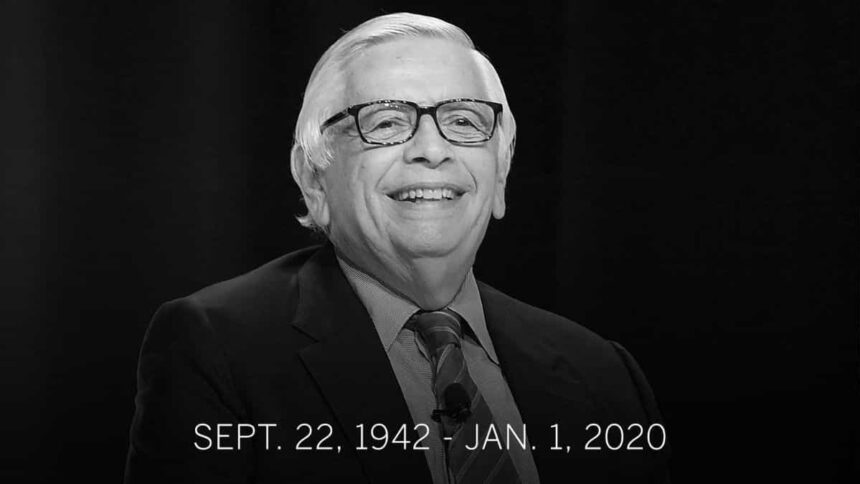
During the 1990s and 2000s, Stern oversaw NBA basketball’s development into one of the most watched sports in the world. By organizing training camps, hosting exhibition games, and signing more international players, he is credited with growing and expanding the NBA’s fanbase, particularly overseas.
Additionally, under Stern’s direction, the NBA opened 12 offices in foreign countries and broadcast to more than 200 areas in more than 40 languages. The Women’s National Basketball Association and the NBA G League, the NBA’s development league, were founded with Stern’s assistance.
NBA.com, NBA TV, and NBA League Pass were all introduced by the NBA under Stern. NBA Cares, the NBA’s social responsibility initiative, was also founded by him.
Early Years
One of the three children of Jewish parents Anna (née Bronstein, 1918-1990) and William Stern (1918-1980), David Stern was born in Manhattan, New York City. He was raised in Teaneck, New Jersey, and his father owned a Jewish delicatessen in Manhattan’s Chelsea district.
As a child, Stern supported the New York Knicks, viewed Carl Braun as his hero, and went to Madison Square Garden games with his father. Before suffering a devastating right knee injury throughout a New York Lawyers League game, he briefly played basketball as an adult.
Following his graduation from Teaneck High School in 1959, Stern enrolled at Rutgers University, where he joined the Sigma Alpha Mu fraternity and earned a B.A. in history in 1963. After that, he went to Columbia Law School, graduating in 1966 with a J.D.
National Basketball Association
Early Work
After earning his law degree, Stern joined the long-standing legal team that has long defended the NBA, Proskauer, Rose, Goetz & Mendelsohn (now Proskauer Rose).
In the historic lawsuit Oscar Robertson initiated against the NBA, he served as the firm’s primary attorney. The case was Robertson v. National Basketball Association. In exchange for the NBA eliminating the “option” clause in its uniform player contract and enabling players to become free agents for the first time, Stern assisted the league in reaching a settlement that permitted the NBA/ABA merger to take place.
Stern resigned from Proskauer Rose in 1978 to work for NBA Commissioner Larry O’Brien as general counsel. By the time O’Brien moved Stern to executive vice president for business and legal affairs of the NBA in 1980, Stern was in fact in charge of the league’s marketing, television, and public relations. During this time, Stern was substantially responsible for two historic accords with the NBA Players’ Association: the team salary cap and drug testing.
According to a Los Angeles Times article from August 1980, 40 to 75 percent of NBA players used cocaine. The NBA acknowledged that it had a drug problem and that it was taking steps to address it, but the drug testing policy addressed this perception. Of the top sports leagues in North America, the NBA was the first to introduce a drug testing program. Owner and player were practically partners in a revenue-sharing structure as a result of the pay cap, with players getting 53% of total income. Both of these accords enhanced Stern’s reputation within the NBA.
NBA Commissioner
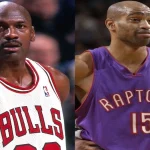
Stern succeeded O’Brien as NBA Commissioner on February 1, 1984, as the league was emerging from its most difficult time. Stern shifted the emphasis away from promoting the league’s franchises and toward its great players, including Magic Johnson, Larry Bird, Michael Jordan, and Charles Barkley, who were selected in the first round of the 1984 NBA draft, which took place shortly after Stern entered office.
Particularly with Jordan’s arrival, the NBA entered a new age of financial prosperity. With him came his flair and talent for the game, which led to Nike contracts for shoes and helped raise the league’s profile on a national level.
Stern led the league through declining viewership on the way to international expansion. For $2,000 a year, Stern gave the Argentina Channel 9 and South American basketball and soccer analyst Adrian Paenza the right to broadcast weekly NBA highlights during his first year as commissioner.
To extend the league’s reach outside of North America, he began delivering VHS tapes from his New York office to China’s state-run television station in 1987. The 1992 United States Olympic basketball team, known as the “Dream Team,” which produced the first generation of NBA stars from abroad, was made possible because to Stern’s efforts to permit professionals to compete in the Olympics.
Personal Life and Death
Eric and Andrew were the couple’s two kids, and Stern was married to Dianne Bock Stern. In Scarsdale, New York, they lived. Stern was making a $9 million salary towards the end of his commissionership. He was 5 feet 9 inches tall (1.75 m).
Stern needed emergency surgery after experiencing a cerebral bleed on December 12, 2019. On January 1, 2020, he passed away in Manhattan at the age of 77. For the rest of the 2019–20 season, all NBA clubs wore black bands on their jerseys as a tribute to Stern. Basketball greats and players like LeBron James, Magic Johnson, Michael Jordan, and Kobe Bryant (who passed away 25 days after Stern) expressed their sorrow over his passing.
“Get more sports news, cricket news, and football updates, log on to sportsdigest.in. Follow us on Facebook or Twitter and Subscribe to our YouTube Channel.”