



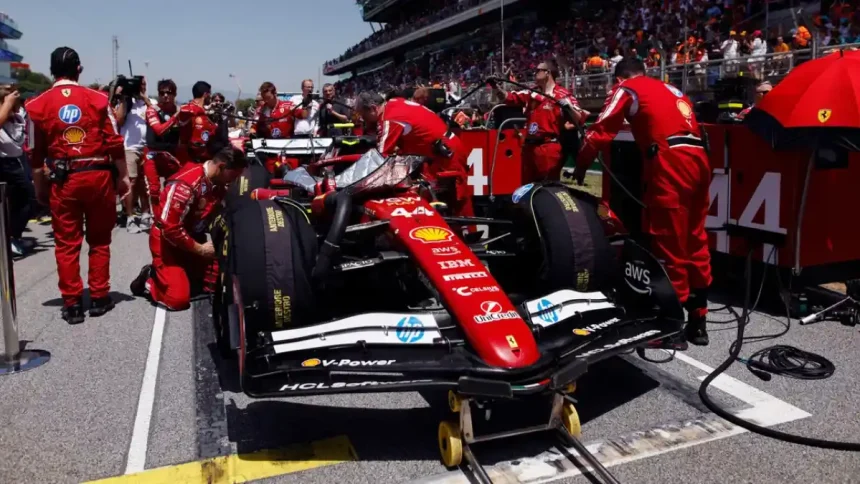
The roar of engines often masks a quieter but very important part of motorsport. Pit Stop Strategies are really important in those seconds where races are won or lost. While fans focus on cars passing each other. How fast they go, it’s the execution and timing of Pit Stop Strategies that frequently change the leaderboard in a big way.
The Hidden Match Behind Pit Stop Strategies
motorsport is not just about being the fastest. It’s a game where Pit Stop Strategies control the pace of the race. Teams think about every detail before the race starts like how tires will wear out, how much fuel they’ll need and what the weather will be like.
A single pit stop can cost seconds and during that time other drivers can get far ahead. Sometimes those who pit come back with fresher tires and less fuel, which helps them drive faster and turn better.
This balance between time lost in the pit lane and time gained on track is what Pit Stop Strategies are about.
Timing is Everything in Pit Stop Strategies
Timing is key to successful Pit Stop Strategies. Teams must choose the lap to pit often called the “pit window.” This decision depends on tire wear, race pace and where other drivers are.
Read More

Pitting early can leave a driver in trouble later in the race because their tires will wear out. Pitting late can mean losing pace and position on the track. The margin for error is very small and even a delay of a lapse can ruin the whole strategy.
In series like Formula 1 teams even use timing to execute special moves like undercuts and overcuts. An undercut is when a driver pits early to gain time on tires while an overcut is when they stay out longer to gain from clean air and track position.
Speed vs Strategy: The Trade-Off in Pit Stop Strategies
Every pit stop is a trade-off. While drivers lose time stopped in the pit lane they gain advantages once they’re back on track. Fresh tires give them grip, which helps them drive faster and turn better.
Read More

That’s why strategies with stops often work better than conservative one-stop strategies on circuits where tires wear out quickly. A two-stop strategy for example divides the race into parts where drivers can push harder with fresher tires.
However more stops also mean more time lost overall making the calculation very situational. Teams must constantly evaluate whether the pace advantage is worth the time lost in the pit lane.
The Execution Factor in Pit Stop Strategies
Even the best Pit Stop Strategies can fail without execution. Pit crews work under a lot of pressure often changing tires in under two seconds in top-level motorsport.
A slow or error-filled stop can immediately cost positions while an executed one can help a driver move ahead of rivals. The difference between a stop and a delayed one is often measured in tenths of a second but those tenths can decide the outcome of the race.
The pit crew is therefore just as critical as the driver making Pit Stop Strategies a team effort than just the drivers job.
How Pit Stop Strategies Shape Race Outcomes
The impact of Pit Stop Strategies is most visible in moments that define the race. Strategic decisions can change positions without an on-track pass. Teams use pit stops to get out of traffic gain track position or respond to what rivals are doing.
Read More

Safety cars and changing weather conditions add complexity. A timed pit stop under a safety car can greatly reduce time loss offering a strategic advantage that is impossible under normal conditions.
In cases races are not decided by who is the fastest over one lap but by who manages their race phases most efficiently through Pit Stop Strategies.
Data, Simulation and the Evolution of Pit Stop Strategies
Modern Pit Stop Strategies are driven by data and simulation. Teams use models to estimate tire wear, fuel consumption and optimal pit windows.
Advanced analytics allow teams to simulate race scenarios in real time adjusting strategies as the race unfolds. This data-driven approach has transformed pit stops from decisions into proactive calculated moves.
As motorsport continues to evolve Pit Stop Strategies are becoming more sophisticated, combining intuition with machine precision to influence race results at the highest level.
Also Read: F1 2026 Power Unit Crisis: The Key Changes Being Considered