
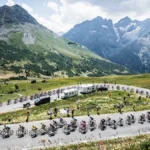
Tour de France Jerseys: The Tour de France looks so colorfully chaotic that it’s almost psychedelic when the peloton filled with bright, splashy jerseys whooshes by in the blink of an eye. All the pro cyclists racing the Tour wear their team jerseys, which are covered in the names of the team and all the sponsors, and are designed to be as bright, recognizable, and eye-catching as possible.
However, throughout the race, four cyclists are awarded different, special colored jerseys that are unique to the Tour de France. These colors include yellow (maillot jaune), green (maillot vert), red polka dots (maillot à pois rouges), and white (maillot blanc).
Each one of these Tour de France jerseys has its own meaning and importance. The rider wearing each of these jerseys can change at the end of every stage, and often does, with the special jersey changing hands before the next day’s stage begins.

Tour de France Jerseys: Colours And Significance
Here’s what each Tour de France jersey colour represent:
The Yellow Jersey (Maillot Jaune)
The Crown Jewel

The yellow jersey is bestowed upon the rider who leads the General Classification (GC) with the lowest cumulative time across all stages of the race.
Unlike a stage win, which reflects a single day’s performance, the yellow jersey symbolises consistency, endurance, and tactical acumen over the three-week event. The wearer may not win every day, but is the most efficient and resilient rider overall. At the end of each stage, officials tally each rider’s total time, and the one with the lowest combined time wears the yellow jersey for the next chapter.
Legends such as Tadej Pogačar, Jonas Vingegaard, and Chris Froome have all worn the yellow jersey, reaching the pinnacle of the cycling world.

The Green Jersey (Maillot Vert)
The Fastest Pair of Legs
The green jersey is earned by the leader of the Points Classification, often referred to as the sprinter’s jersey. Points are awarded to riders based on their finishing position at the end of each stage and at designated intermediate sprint sections during the race.
Riders collect more points at flatter stages, recognising the fast men in the peloton. However, they must be consistent to score points over many stages, not just win a few.
Erik Zabel and Peter Sagan are some of the greats who have worn it with distinction.
The Polka Dot Jersey (Maillot à Pois Rouges)
King of the Mountains
One of the most visually distinctive Tour de France jerseys, the white jersey with red polka dots is awarded to the best climber in the Tour — the leader of the Mountains Classification.
Points are awarded to the first riders over the top of designated climbs throughout the race. These climbs are ranked from Category 4 (easiest) to Hors Catégorie (beyond categorization), the most difficult ascents. The steeper and longer the climb, the more points it offers. On summit finishes, the points are doubled, making those stages crucial for climbers chasing this jersey.
Often worn by light, explosive climbers, the polka dot jersey is a badge of honor for those who excel when the road tilts skyward.
Also Read: Pink, Purple, Blue, White: Giro d’Italia Jersey Colours Explained
The White Jersey (Maillot Blanc)
Best Young Rider
The white jersey is awarded to the best young rider in the race — specifically, the rider under the age of 26 (on January 1 of the race year) who has the lowest cumulative time.
This jersey mirrors the yellow jersey in that it is also based on the General Classification, but it is restricted to younger competitors. Many of today’s stars first made their mark by winning the white jersey. Tadej Pogačar, for instance, dominated this competition before aging out of it.
Seen as a sign of future greatness, the white jersey highlights rising talent and often forecasts the next generation of Tour contenders.