
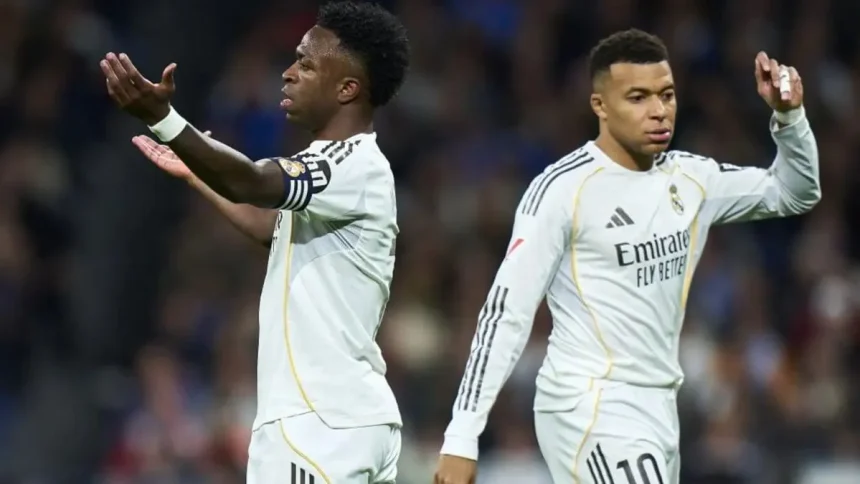
From the electric atmosphere of the Santiago Bernabeu to the nerve-shredding finishes in Europe’s elite ties, Real Madrid’s Late-Game Adaptability has become the defining edge separating Los Blanco from the rest. Whether it’s overturning deficits, reshaping tactics after 75 minutes, or snatching moments of brilliance when opponents tire, Madrid’s knack for turning the tide when it matters most has turned fringe possibilities into historic certainties.
The European Stage: Where Pressure Becomes Opportunity
If there’s one arena where football’s drama is dialed up to eleven, it’s European knockout football. Real Madrid pedals this pressure better than almost anybody. Time and again in the Champions League, Madrid have shown a capacity not just to endure moments of adversity, but to flip them. It’s not luck, it’s adaptation. Across countless late goals and tactical shifts, Real Madrid’s Late-Game Adaptability has moulded contests to their favour, against tactical puzzles designed to stifle them.
Clutch Moments That Defined the Knockout DNA
Look at recent knockout ties. Against Benfica in February 2026, Madrid trailed and faced stern resistance, but structural shifts and renewing attacking intent ultimately yielded a decisive victory, sealing a 3-1 aggregate progression. Whether it’s rotating personnel or changing intensity in midfield to break down organized blocks, Madrid’s ability to adapt late in games underscores their elite status.
This isn’t a fluke. History echoes similar examples: in the 2021–22 season’s Champions League semi-finals, Real Madrid overturned a first-leg deficit against Manchester City through intense late pressure and judicious in–game changes. These aren’t random flashes, they are ingrained responses to knockout volatility.
Tactical Intelligence at the Death
Real Madrid’s Late-Game Adaptability isn’t purely about scoring late goals, it’s about how they construct those chances. In the Benfica tie, for instance, Madrid’s midfield tweaked its pressing triggers and positional balance to disrupt José Mourinho’s disciplined defensive block, eventually opening spaces for vertical breaks and explosive transitions.
What we see from the Bernabéu to the away legs is a pattern: Madrid’s in-game tactical shifts, be it subtle formation changes, reshuffling the high press threshold, or altering build-up rhythms, tilt the balance as the clock winds down.
The Role of Experience and Squad Intelligence
In European knockout football, experience isn’t just valuable, it’s priceless. Madrid’s roster blends emerging stars with seasoned campaigners who have lived these moments before. This collective experience enhances Real Madrid’s Late-Game Adaptability, because players understand not only what changes are being made, but why they’re being made.
Substitutes aren’t fillers, they’re extensions of a tactical plan. In semi-final drama against Bayern from a recent Champions League campaign, substitutes came on and reshaped attacking dynamics, capitalizing on Bayern’s fatigue and structural loosening.

A Club Culture That Breathes Adaptation
Let’s be clear: Real Madrid’s strength in late knockout scenarios isn’t down to one coach or one system. Across eras, from Zinedine Zidane’s tactical flexibility to Carlo Ancelotti’s ability to change approach mid-game, Madrid has cultivated a culture that embraces adaptation over rigidity. A rigid system often falters as the opponent shifts shape; adaptability thrives because it responds to change rather than enforcing conformity.
This cultural backbone explains why Madrid appear comfortable when other elite teams tighten up. Instead of succumbing to pressure, they exploit it.
The Mental Edge in European Knockouts
When you strip away tactics and formations, what you’re left with is mental resolve, that belief that a game isn’t over until the final whistle. That belief is partly psychological, and partly tactical. Real Madrid’s Late-Game Adaptability feeds into this mindset: players trust they can change the course of a match because the club’s history is littered with examples of that happening, from stunning comebacks to last-minute winners, year after year.
Momentum Shifts and Game Management
Momentum swings are an integral part of knockout football. But not every team can manage them effectively. Some teams lose their way as opponents withdraw into defensive shells. Madrid, however, seem to relish it. They use late bursts of energy, fluid position changes, and rhythm shifts to unsettle opponents. In doing so, they reclaim time and space for themselves when it matters most.
This momentum mastery is another facet of Real Madrid’s Late-Game Adaptability, the ability to not just withstand pressure but to extract advantage from it.
Also Read: How UEFA Knockout Football Differs From League Matches: Format, Strategy, and Risk Explained