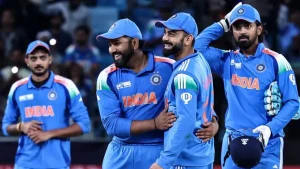
Royal Challengers Bengaluru did not win IPL 2026 by waiting for one famous batter to rescue every night. It retained the title on May 31 at Narendra Modi Stadium, beating the Gujarat Titans by five wickets after chasing 156 in 18 overs. Virat Kohli finished unbeaten on 75 from 42 balls, but the final had already bent toward RCB when Josh Hazlewood and Bhuvneshwar Kumar attacked GT’s top order with short length. Six of the eight Gujarat wickets fell to short balls, and that was the cleanest tactical note from a season that often looked crowded at the top.
The Table Put Everyone Under Pressure
The points table IPL 2026 did not give RCB room to coast. It finished the league phase on 18 points from 14 matches, level with Gujarat Titans and Sunrisers Hyderabad, with net run rate separating the top three. That meant one bad over in April could still matter in May, and Rajat Patidar’s side played as if it knew that. RCB’s better nights had a clear shape: new-ball control, middle-over protection, then enough batting depth to keep Kohli from carrying every chase alone. The small observation from the final matched the season: RCB did not wait for GT to make a mistake; it forced one with length, field placement, and pace into the pitch.
Gujarat Had the Batting, Not the Final Answer
Gujarat’s route to the final still made sense. Shubman Gill, Sai Sudharsa,n and Jos Buttler gave it one of the strongest top-order shapes in the league, and Washington Sundar’s unbeaten 50 from 37 balls in the final showed why the side rarely looked dead even after early wickets. The issue in Ahmedabad was not talent; it was tempo. GT lost Gill and Sudharsan early, then kept trying to restart the innings without a stable platform. A team can dominate stretches of a campaign and still lose last night if the powerplay collapses and the middle order has to solve two problems at once: rebuild and attack.
Player Lists Became Tactical Documents
The IPL team 2026 players list mattered because squads were no longer read as collections of names. RCB used Venkatesh Iyer as an Impact Player in the final, and his 32 from 16 balls turned the chase from careful to comfortable before Gujarat could build scoreboard pressure. That kind of role usage separated the best sides from the ones that only had headline players. Rajasthan’s Vaibhav Sooryavanshi, listed by IPL’s own videos as Orange Cap holder and MVP, also showed how young batting power changed match planning around the league. Teams had to ask not only who started, but who entered after 10 overs, who bowled the 16th, and who could hit pace from ball one.
Betting Reads Followed the Same Patterns
The betting conversation around IPL 2026 became more technical because the league gave enough evidence every night. A fan comparing cricket betting sites India before an RCB, GT, or SRH match still had to start with the cricket: powerplay matchups, dew, Impact Player options, death bowling, and whether a side had saved spin for a left-right pair. Gujarat’s final innings was a useful case study because the early market would have shifted after Gill and Sudharsan fell to the short-ball plan. The best read was not “RCB momentum” as a vague phrase; it was Hazlewood hitting the deck, Bhuvneshwar taking his 28th wicket of the season, and GT losing the boundary option through the middle. Odds moved because the match changed first.
Read More

Sunrisers and Royals Showed Different Paths
The 2026 IPL point table also showed how different strategies could reach the same playoff fight. Sunrisers Hyderabad had enough power to sit level on 18 points with RCB and GT, while Rajasthan made the final four through a mix of youthful batting and enough bowling control to survive thin margins. That is where the season felt less like a single tactical trend and more like a test of identity. SRH could push run rate, Rajasthan could lean into Sooryavanshi’s scoring surge, and Punjab stayed alive deep into the race on 15 points before the final playoff picture settled. IPL seasons usually reward balance, but 2026 rewarded sides that knew exactly when to be unbalanced.
The App Screen Needed Context
The last-but-one betting section concerns match timing because IPL markets move quickly after the toss, powerplay wickets, and Impact Player decisions. A user looking for the best app for betting during the final needed more than a fast bet slip; the useful screen had to show score, wickets, overs, batter matchups, and whether Rashid Khan still had overs left. When Rashid removed Rajat Patidar and Krunal Pandya within four balls, GT briefly had a window, but RCB still had Kohli set and enough batting behind him. The serious betting read was not the noise after two wickets had fallen. It was the chase equation, Kohli’s control, and the fact that RCB still needed fewer than a run a ball with time left.
RCB’s Season Had a Spine
RCB’s title defense will be remembered for Kohli’s winning six and his 675-run season, but the cricket underneath was broader. Andy Flower’s staff gave Patidar enough clarity to use bowlers in defined roles and keep the batting order flexible. The final told the whole story in miniature: bowl short to break Gujarat’s base, use the Impact Player aggressively, then let Kohli finish without panic. RCB became only the third franchise, after Chennai Super Kings and Mumbai Indians, to retain the IPL title, and it did so by making the biggest night look like a plan it had already rehearsed.
Read More