



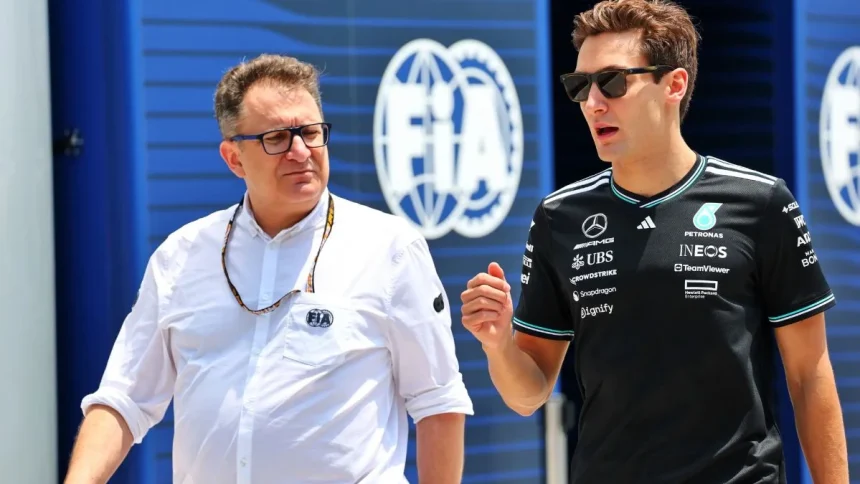
The Federation Internationale de l’Automobile (FIA) has made its stance clear on the future of Formula 1 engine regulations, with single-seater technical chief Nikolas Tombazis stating that the sport “cannot be hostage” to manufacturers.
New 2026 power unit regulations are intended to help attract additional manufacturers into F1. The strategy has already been successful with both
General Motors registered with Cadillac and Audi, announcing that they would enter as a works team. GM plans to be a power unit supplier in the near future.
Ford is also back as a technical partner to Red Bull Powertrains, and Honda will be returning as a works team with Aston Martin.
An important part of the 2026 rules includes a 50% split between internal combustion engine (ICE) and electric energy to align the overall performance of the two with a focus on sustainability.
Read More

FIA Single-Seater Director Speaks On Changing Landscapes
However, Nikolas Tombazis highlighted that the situation has evolved since those rules were first discussed, particularly in terms of how manufacturers view combustion engines and electrification.
Nikolas told the media, “First of all, it is true, the political landscape has changed. Back when we discussed the current regulations, the automotive companies, who were very involved, told us that they’re never going to make another internal combustion engine again, a new one.”
“They were going to phase out, and by whatever year, they were going to be fully electrical; obviously, this hasn’t happened. That’s not to underestimate the importance of electrification globally, but it didn’t happen as much as I said.”
Read More

“Secondly, I think one of the not frequently discussed stories, because it’s not something visible, is that, of course, we did go for fully sustainable fuels, and I think, a reasonably good outcome.”
“So in terms of where we want to be in the future, we do need to protect the sport from the world macro-economic situation, meaning we cannot be hostage to automotive companies deciding to be part of our sport or not.”
He continued, “FIA wants them to be part of our sport, absolutely. That’s why we’ve worked so hard to secure new ones to participate.”
“But we can also not be in a position where, if they decide they don’t want to be, we’re suddenly left vulnerable, and we need to keep working for cost reduction.”
“If we are to change anything for the next cycle, we need to start discussing it very soon, because the time it takes to make a power unit, an engine and all that is quite long.”
“So it may sound a bit strange to be discussing these matters only a few races after we’ve started, but that is the natural cycle of the discussion when it needs to take place.”
Read More
With discussions for the next engine cycle already underway for 2031, the FIA’s message is clear.
While manufacturers remain central to Formula 1’s growth, the FIA is aiming to avoid over-dependence and ensure long-term stability regardless of shifting industry priorities.
Also Read: Christian Horner Spotted in MotoGP Paddock, Sparks Speculation