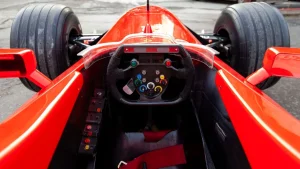
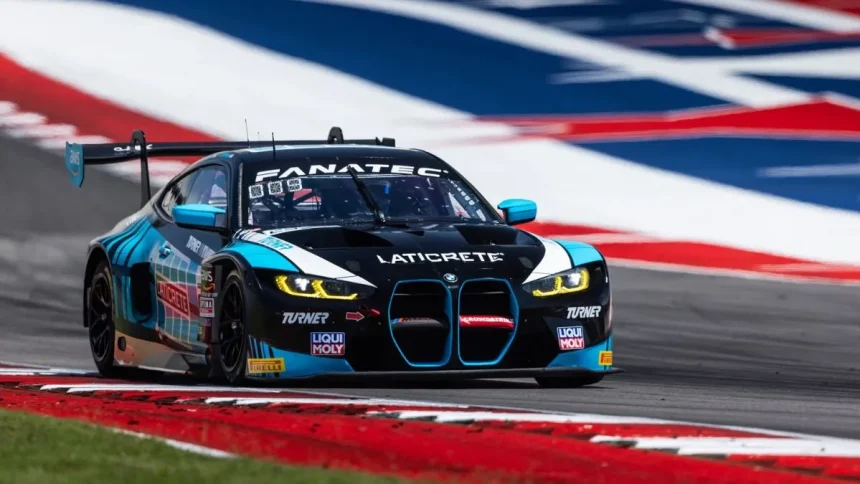
From pit wall to cockpit and from engineering bay to the digital sandbox, motorsport is undergoing a profound transformation powered by simulation technology, strategic intelligence, and the pursuit of marginal gains. In an arena where wins are decided by thousandths of a second and championships by a handful of strategic calls, these pillars are rewriting how teams prepare, compete, and excel.
Motorsport Enters the Digital Age: Simulation at the Core
Simulation technology today is not a luxury, it is a foundation of the motorsport ecosystem. Gone are the days when drivers learned circuits on track alone or engineers relied solely on physical testing. Advanced simulators now replicate complex elements such as aerodynamics, tire behavior, suspension dynamics, and even weather variables long before a car hits asphalt. Teams use these virtual platforms for driver preparation, vehicle setup, and strategic planning across series from Formula One to endurance racing.
Professional motorsport teams integrate high-fidelity simulators into daily operations to familiarize drivers with every twist of a circuit and to trial multiple configurations without the expense and limitations of real-world testing. These tools shave months off development cycles and help uncover performance insights that would be impossible through intuition alone.
The Strategy Revolution: Data, Algorithms, and Race Intelligence
Strategic excellence in motorsport now hinges on data as much as engineering. With hundreds of sensors feeding telemetry data in real time, teams can optimize decisions down to the tiniest variable fuel load, tire compounds, or pit stop timing. Data analytics and machine learning convert this data into actionable insights during practice, qualifying, and race day.
More recently, reinforcement learning models have entered the fray, offering dynamic strategy optimization that adapts to live conditions. These algorithms evaluate myriad scenarios, such as varying weather, tire degradation, or safety cars and can outperform traditional Monte Carlo simulations in predictive accuracy and responsiveness. They are transforming choices around pit stops and compound selection, making strategy a flexible weapon rather than a static plan.
Read More

In high-stakes championships like Formula One, these digital strategies are complemented by seasoned strategists who balance algorithmic recommendations with human judgement, weather forecasts, and race-day nuances. The result is a hybrid approach where data amplifies decision-making precision without removing the strategic essence of motorsport.
The Rise of Sim Racing as a Development Tool
While traditionally a training aid, simulation has begun to influence the sport beyond driver preparation. Professional and amateur simulators mirror real-world physics and telemetry so accurately that they are now used to test engineering hypotheses and evaluate setup changes before track trials.
The crossover between sim racing and live motorsport has also created a new talent pipeline. Drivers who excel in simulators can transition into real-world racing, bringing with them a deep understanding of vehicle dynamics, racing lines, and race craft honed in virtual environments. This development underscores how simulation reduces barriers to entry and nurtures a new generation of strategic racers.
Read More

Marginal Gains: The Philosophy Driving Performance
The concept of marginal gains, optimizing every tiny aspect of performance, has become a guiding principle in motorsport. This philosophy asserts that focusing on small improvements across all areas, whether aerodynamic tweaks, tire warm-up procedures, or crew performance in pit stops, compounds into significant competitive advantages.
In a sport where tenths of a second influence championship standings, the aggregation of these incremental improvements can mean the difference between victory and defeat. From engineering refinements to data-driven adjustments and human performance enhancements, the cumulative effect of marginal gains underpins modern motorsport competition.
Predictive Analytics and Real-Time Decision Support
Predictive engineering frameworks and closed-loop systems further enhance how motorsport teams operate. By simulating vehicle behavior and integrating multi-source data streams, teams can anticipate performance outcomes instead of reacting to issues after they arise. These analytics help synchronize control systems, chassis behavior, and power unit strategies, ensuring that race cars remain optimized throughout development and competition phases.
This shift toward predictive analytics has enabled engineers to validate designs earlier and explore unconventional strategies with confidence. Instead of relying on physical testing alone, teams combine simulation outputs with real-world runs to achieve both speed and reliability, a balance that defines success in contemporary motorsport.
Digital Feedback Loops: Closing the Gap Between Virtual and Reality
Today’s motorsport teams operate with digital feedback loops that connect simulation, telemetry, strategy optimization, and performance evaluation. When a driver completes a simulated lap, data feeds directly into engineering models that adjust aerodynamic maps, thermal management strategies, and chassis settings. These refined models are then tested physically or virtually, completing a cycle that continuously enhances performance.
This iterative process reduces risk, accelerates innovation, and ensures that every element of a race car and team strategy is tuned with precision. It exemplifies how motorsport now excels not only through raw speed but through intelligent, interconnected systems that continuously learn and improve.
Read More

Also Read: What Is Ground Effect In Modern F1 Cars?