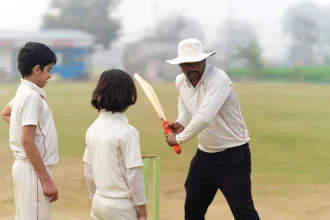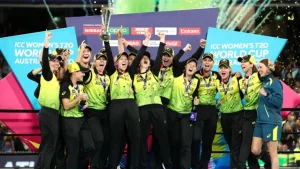

Cricket is a two-team sport with each team having eleven players. An official cricket match can go on for an afternoon or several days. Despite having extremely different regulations and game action, baseball and cricket have the same fundamental idea. As the opposing team fields and tries to finish the batting team’s innings, teams bat in subsequent innings in an effort to score runs. The team with the most runs wins after each team has batted an equal number of innings (either one or two, depending on the rules decided upon prior to the game).
In this article, we will take a look at the most commonly used acronyms in the sport of cricket.
Acronyms used to denote the Types of Dismissal
- ct or c caught
- b bowled
- ct and b or c and b caught and bowled (by the same member of the fielding side); the abbreviations + and & are often substituted for “and”
- ro run out
- st stumped
- lbw leg before wicket
- ht wkt hit wicket
Acronyms used to denote the types of bowlers
- RF right armed fast
- LF left armed fast
- RFM right-armed fast-medium
- LFM left armed fast-medium
- RM right armed medium
- LM left armed medium
- OB right-armed finger spinner
- LB right armed wrist spinner
- SLA left-armed finger spinner (sla = slow left arm)
- CH / SLC left-armed wrist spinner (ch = chinaman)
Acronyms used to denote the types of batsmen
- ROP right-handed opener
- LOP left-handed opener
- RMD right-handed middle order batsman
- LMD left-handed middle order batsman
Acronyms used for bowling stats
- MP / PL / MAT matches played
- IP innings played
- O overs bowled
- B byes or balls bowled
- LB leg byes
- M maiden overs bowled
- W wickets taken
- R runs allowed
- E economy (runs plus extras allowed per over)
- AV average (runs allowed per wicket taken)
- SR strike rate (balls bowled per wicket taken)
- WD wide balls
- NB no balls
- 5W number of times this bowler has taken five wickets in an innings
- 10W number of times this bowler has taken ten wickets in a match (over both innings of a test)
- BB’s best bowling is noted in terms of the number of wickets taken and number of runs allowed, ie 5 / 40 five wickets for forty runs allowed
- BBI’s best bowling in an innings
- BBM’s best bowling in a match (over both innings of a test)
Acronyms used for batting stats
- MP / PL / MAT matches played
- IP innings played
- R runs scored
- B / BF balls faced
- AV / AVE average (runs made per wicket)
- AVI average runs per innings
- SR strike rate (runs made per 100 balls)
- RR run rate (runs + extras accumulated per over in the course of an innings; ie total runs divided by overs bowled)
- SS scoring shots (number of shots from a batsman which yielded runs)
- NO times not out
- HS high score
- * [asterisk] applied to a score to indicate an innings total made not out, ie 134* = 134 not out
- B4 boundary fours
- B6 boundary sixes
- 100 centuries scored
- 50 fifties scored (including centuries, ie every inning total of fifty or greater)
-
Acronyms used for fielding positions and stats
- WK wicketkeeper
- BW / BWL bowler
- IF / INF infield(er)
- OF outfield(er)
- MP / PL / MAT matches played
- CT / C catches
- ST stumpings
- RO run-outs
- PR penalty runs
Also Read: Step-by-Step Guide to Become an International Cricket Umpire
Read More
“Get more sports news, cricket news, and football updates, log on to sportsdigest.in. Follow us on Facebook or Twitter and Subscribe to our YouTube Channel.”