
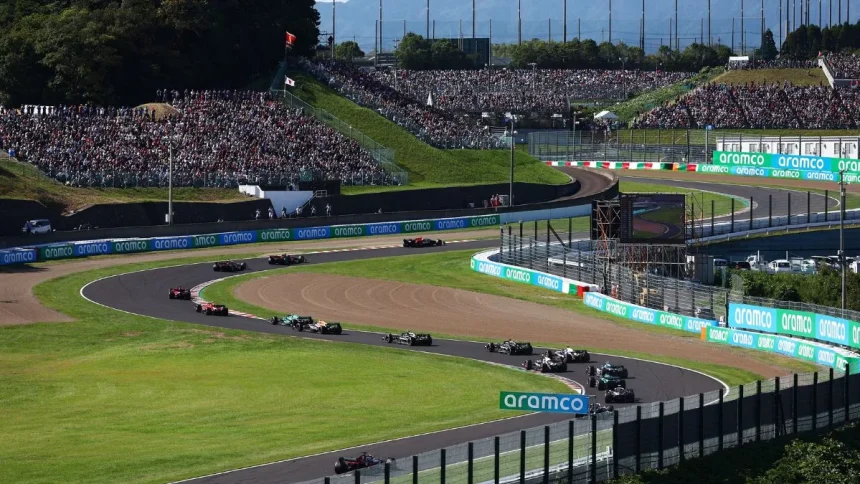
Some Formula 1 circuits are important because they host a race. Suzuka is important because it feels bigger than that. It is one of the rare tracks that drivers genuinely adore, fans treat almost like sacred ground, and the sport itself keeps returning to for big moments.
That is why Suzuka is not just another stop on the calendar. It is one of Formula 1’s most respected venues, and there are solid reasons why it continues to stand out.
Plenty of circuits are described as demanding, technical, or iconic. Suzuka is one of the few that drivers repeatedly talk about with real affection.
Fernando Alonso has called it “one of the best circuits in the world” and “a magic place,” while Formula 1’s own recent feature says Suzuka remains deeply loved by both drivers and fans. Esteban Ocon has also described driving there as “pure pleasure.”
What is so special about Suzuka Circuit?
The layout of the Suzuka racetrack is a key factor behind its fan base. You must be quick, flow through the turns, and not make any mistakes on the way around. On top of that, there is not very much room to drive lazily at Suzuka.
Read More

The S Curves require that drivers keep a steady rhythm while also being very precise; the middle portions of the track (Degner, Hairpin, Spoon, and the very well-known 130R) provide an endless series of corners to navigate.
Formula 1’s website indicates that Suzuka is the only figure-eight racetrack currently used in F1 racing because it crosses over itself with an overpass.
The unique combination of attributes that create the feel of the circuit gives Suzuka a different level of character compared to most other newer circuits. It is not only a very difficult racing circuit, but also one that is rewarding to drive on.
Read More

When Was the First Match in Suzuka?
Suzuka is a place with great meaning, both because of the numerous important moments that have occurred in Formula 1 history and because this season’s Japanese Grand Prix will add another layer of significance.
The first Japanese Grand Prix was held at Fuji in 1976. Suzuka started hosting Formula 1 races starting in 1987 and has produced many of the most memorable and defining moments in Formula 1 history.
Suzuka has been the venue for deciding championship races, dramatic accidents, comebacks, and many of the most iconic images that have been celebrated multiple times over the years.
Most notably, the legendary championship-deciding victory of Ayrton Senna in 1988, his two titanic battles with Alain Prost in 1989 and 1990, Michael Schumacher clinching the first Drivers Championship in 21 years for Ferrari in 2000, and Kimi Raikkonen’s incredible last-lap pass from 17th on the grid to victory in 2005 are just a few examples of the many significant events in Formula One history that have taken place at Suzuka.
When people refer to Suzuka as an “iconic” venue, it is not just because of a longing for the past; Suzuka has truly produced greatness.
Suzuka is not loved only because of history. It also keeps producing interesting racing conditions.
Read More

The track’s high-speed nature means drivers spend a lot of the lap right on the edge, and Formula 1 notes that the weather can also be unpredictable, which adds another layer for teams and strategists.
So, Suzuka Circuit is one of Formula 1’s most loved tracks because it gets almost everything right.
Also Read: 2026 Japanese Grand Prix: Suzuka Circuit Track Analysis