MotoGP is always pushing the limits of technology to make racing faster, safer, and more exciting. In 2025, a big change arrived in the form of a new MotoGP electronics update that’s shaking things up on the grid. This update is all about something called stability control, and it’s a game-changer for riders and fans alike.
What is Stability Control In MotoGP Electronics Update?
You’ve probably heard of traction control before; that’s the system that helps prevent the rear wheel of a motorcycle from spinning out too much, especially when riders twist the throttle hard. Traction control keeps the bike from losing grip and spinning the wheel wildly. But here’s the thing: traction control mostly deals with wheelspin in a straight line. It doesn’t do a great job handling what happens when a bike slides sideways while leaning into a corner.
That’s where stability control, sometimes called slide control, steps in. This new system in the MotoGP electronics update is way smarter because it looks at more than just wheelspin. It measures:
- How much the bike slides sideways (slide angle)
- How much the bike is leaning over (lean angle)
The relationship between the bike’s forward speed and sideways movement
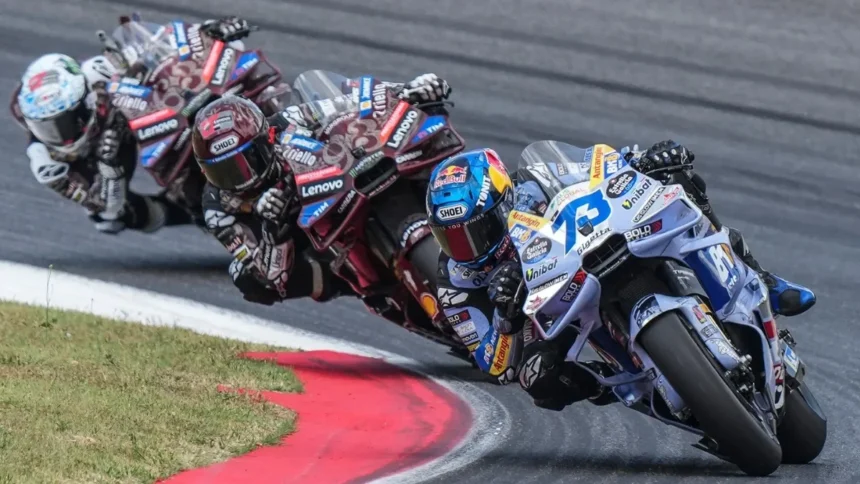
When the system senses the bike is sliding too much at a high lean angle, a tricky and dangerous situation, it automatically reduces engine power to prevent a crash. This means riders can push harder into corners with more confidence, and the risk of highside accidents (where the rider is thrown off the bike) is reduced with this MotoGP electronics update.
Read More

Why Was This MotoGP Electronics Update Needed?
Highside crashes have always been a big danger in MotoGP. Even with traction control, riders still faced moments where the electronics didn’t quite get it right. Sometimes the system cuts power too early, making riders lose time, or doesn’t cut power enough, causing crashes.
A famous crash in 2021 involving Pol Espargaro showed how important better electronics could be. He had a serious highside because the old system didn’t handle slides well enough at lean angles. After that, there was a big push from riders, teams, and manufacturers to bring in stability control, similar to what advanced street motorcycles already use, resulting in the MotoGP electronics update.
How Does This Affect the Race?
With the new MotoGP electronics update rolling out at the 2025 Austrian Grand Prix, most teams have started using it right away. The update comes through the spec ECU (Electronic Control Unit) software, a unified system all teams use to keep racing fair while allowing new tech improvements.
Read More

Riders like Fabio Quartararo from Yamaha think this will help them especially as his team has struggled with wheelspin and bike control. The system makes it easier to manage slides on corner entry, meaning faster, smoother turns without losing control.
Is Everyone Happy With This?
Not exactly. Some riders, including big names like Marc Marquez, are worried that giving the electronics more control takes away from rider skill. They think that too much computer help could make racing less about the rider’s talent and more about software managing the bike.
At the same time, safety is the top priority. The new MotoGP electronics update is seen as a smart step to keep riders safer on track without sacrificing excitement. Teams, riders, and fans are watching closely to see how this balance plays out in future races.
Also read: Never Miss a Lap! MotoGP Now Streaming Free 24/7 Across the US