There’s been a lot of discussion about how TV umpires have handled decisions in the Women’s World Cup 2025 and, indeed, the use of the Decision Review System (DRS) more generally has raised eyebrows. Now the tournament is beyond the halfway point, the variation of TV umpire usage and DRS decisions is again under the microscope.
England vs Bangladesh: Heather Knight’s Controversial Reprieves
The most contentious moment came in the England vs Bangladesh battle. Three lifelines were used by England captain Heather Knight during her stay at the crease one of which was a low throw by Shorna Akter. Knight left the field after the dismissal, only to be brought back when TV umpire Gayathri Venugopalan referred the evidence as “inconclusive.
To make matters worse, a previous caught behind decision was overturned by the third umpire who ruled that the ball had struck the pad before hitting the bat, yet again raising questions from Hussain. Knight remained not out at 79 that guided England to victory, and according to broadcaster Nasser Hussain in the JioStar pressroom, “Knight said she thought she was out”.
Confusion During India vs Pakistan: Muneeba Ali’s Run-Out
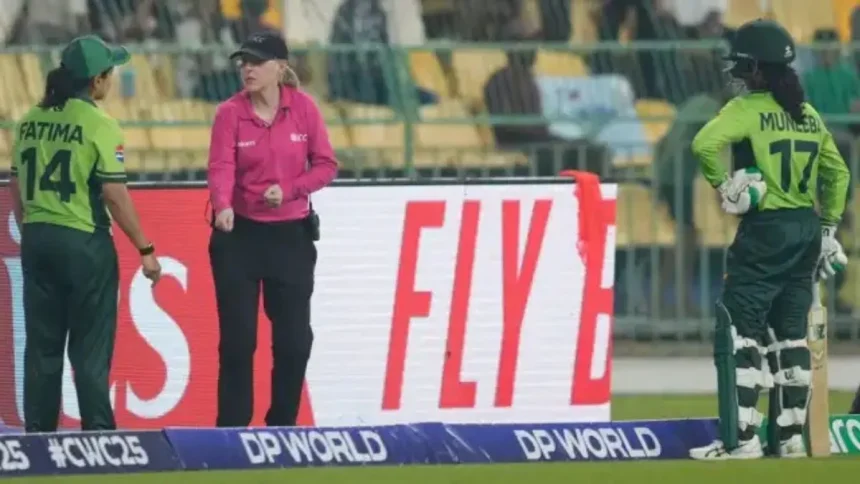
There was another controversy involving the TV umpire during the India vs Pakistan high-intensity match at Colombo. Pakistan opener Muneeba Ali was first displayed as “not out” on the large screen, only to have that decision overturned moments later.
TV umpire Kerrin Klaaste was said to have not checked all the angles prior to giving her initial ruling, subsequently correcting it upon viewing more footage. The hesitation and the confusion made Muneeba and captain Fatima Sana visibly agitated, prompting them to approach the fourth umpire seeking clarification.
Read More
India vs South Africa: Ultra Edge Sparks LBW Debate
The India vs South Africa game added to the confusion when Sune Luus managed to survive an LBW referral. TV umpire Candace la Borde supported the not-out call, based on a murmur on Ultra Edge as evidence of an under-edge. Side-on replays, however, indicated noticeable separation between ball and bat, and one could question the validity of the call.
Alyssa Healy Catch in Spotlight During India vs Australia
There was another moment of controversy in India versus Australia, when Alyssa Healy was adjudged caught at point off Sneh Rana. Third umpire Jacqueline Williams first said, “I can see the ball touching the ground,” before later deciding that the catch was clean. The inconsistency in analyzing replays left people wondering about the depth of the process, including viewers and analysts such as Hussain.
Lack of Experience Among TV Umpires With DRS
Of the 10 TV umpires at the Women’s World Cup, just three have considerable experience with DRS in ODIs:
Sue Redfern – 42 matches
Eloise Sheridan – 25 matches
Kim Cotton – 24 matches
Five umpires have DRS experience in less than five internationals, including:
Candace la Borde (no previous DRS ODIs)
N Janani
Read More
Sarah Dambanenava
Gayathri Venugopalan
Kerrin Klaaste
This glaring absence of exposure has given rise to erroneous judgments under pressure, particularly in the context of world-stage encounters.
Higher Than Average Overturn Rate with DRS Reviews
In the Women’s World Cup in 2025, of the 36 innings, there were 25 successful DRS overturns giving an average of successful reviews of 0.67 per innings. In the Men’s World Cup in 2023 in Asia, the average successful review rate was 0.46 successful reviews per innings, so overall the visiting umpires had more incorrect decisions in the Women’s World Cup instalment.
ICC Remains Tight-Lipped on Umpiring Issues
It has kept quiet on the seemingly inadequate DRS training of its umpires. It’s also not certain if the involved teams have formally complained. ICC umpire manager Sean Easey has, however, been spotted across venues, most likely overseeing the situation at close range.
ALSO READ: AUS v IND 2025: “They both are going until 2027” – Travis Head On Rohit Sharma And Virat Kohli