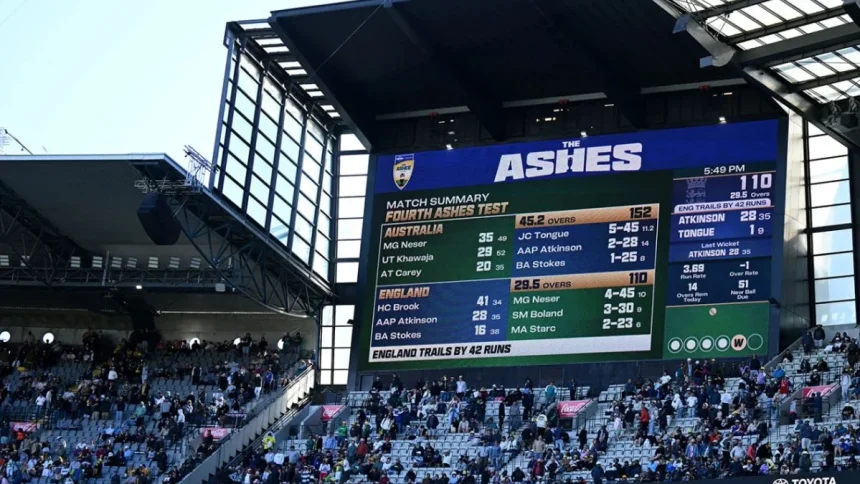
The MCG wicket has been heavily criticised after just one dramatic day of Ashes cricket in 2025/26, with a staggering 20 wickets lost in just one day. Former players of not only Australia but also England questioned whether too much help had been afforded to bowlers on the wicket.
How the Curator’s Plan Backfired on Boxing Day
MCG curator Matt Page had set out to create the same conditions that existed during the Test series played at this time last year’s Border-Gavaskar Trophy Test series, that series being a five-day contest. But the green-painted pitch was anything but the same.
Grass left on the surface is 10mm, which is 3mm more than last year, making it seam sharply all day. And now, it seems very unlikely that the match will go beyond the third day.
Conditions Shape Team Decisions
The lively MCG wicket had a significant impact on team strategies. Both teams decided to bowl first after winning the toss in very chilly Melbourne weather.
England continued with their trend of not having any frontline spinners, while Australia preferred to go with an all-seam attack. This was clearly visible as to how much support fast men were expected to receive.

Former Players Lead the Criticism
Some ex-internationals attributed the fall of wickets to the nature of the wicket rather than batting methods or attacking intentions. Stuart Broad said that it was a surface which provided too much movement, advising that Test pitchers do not require a lot of assistance to be effective.
Glenn McGrath also had the same apprehension when he said that the pitch had too much life in it, making it very tough for the batsmen to get a grip on it in order to defend themselves.
Concerns Over Fair Contest
Former England captain and a player who is famous for his double century at Melbourne’s MCG in 2017-18, Alastair Cook, found that there was an imbalance in favor of bowlers and that if this continued, batsmen wouldn’t have a chance to apply themselves.

Mixed Reactions from Australian Greats
Former fast bowler Brett Lee is of the view that the wicket supported too many runs, terming it “furry,” where the lawn would lift when touched by hands. “Perhaps injured skipper Pat Cummins may have been tempted to don his boots after taking a look at the wicket,” a grinning Brett was quoted as saying.
Comparison with Earlier Ashes Tests
This was the second Test in the Ashes series 2025/26 in which a full squad of 22 players batted on the first day. Before this, 19 wickets had fallen in Perth on a pitch which was labeled “very good” by the ICC despite a lot of criticism by players.
At the MCG, the seam action seems even more noticeable, with the ball suddenly turning sharply after being pitched to get rid of the top-order batsmen on both sides.
Michael Neser Shines Through the Chaos
Australia’s brightest spark with the ball was Michael Neser, who scored a crucial counter attacking 35 at number 8 before taking 4 crucial wickets for 45 to bowl out England inside 30 overs. Neser believed that the wickets could still turn flat and that the attacking game plan adopted here was right.
Will the MCG Pitch Settle Down? However, despite criticism, Neser and other experts feel that the MCG pitch could improve for batting later on during the match. Only time can tell how quickly the grass yields to wear and tear and to what extent an equal balance can be established.
Ashes 2025/26: Balance Remains Talking Point
The blazing opening day of cricketing action has brought backпосеред questions of surface preparation and equality in Test cricket. As the Ashes series of 2025/26 unfolds, attention will continue to focus on whether the playing conditions will allow batting sides to strike back at one of cricket’s most historic grounds.

ALSO READ: Strongest IPL 2026 Unsold Playing 11, Even Better Than The Franchises