



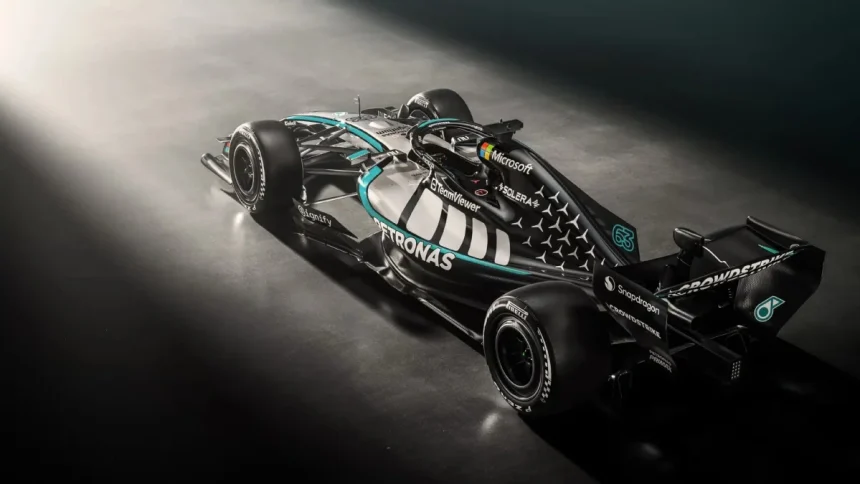
The Mercedes-AMG F1 W17 E Performance is the team’s entry for the 2026 Formula One season, built to meet the sport’s new technical regulations. The car is lighter, more compact, and aerodynamically efficient, featuring active front and rear wings for improved race dynamics. It is powered by a next-generation hybrid power unit with a strong electric focus and 100% sustainable fuel, reflecting Mercedes’ push toward performance and sustainability.
Mercedes W17: Compact and Lightweight 2026 Chassis Design
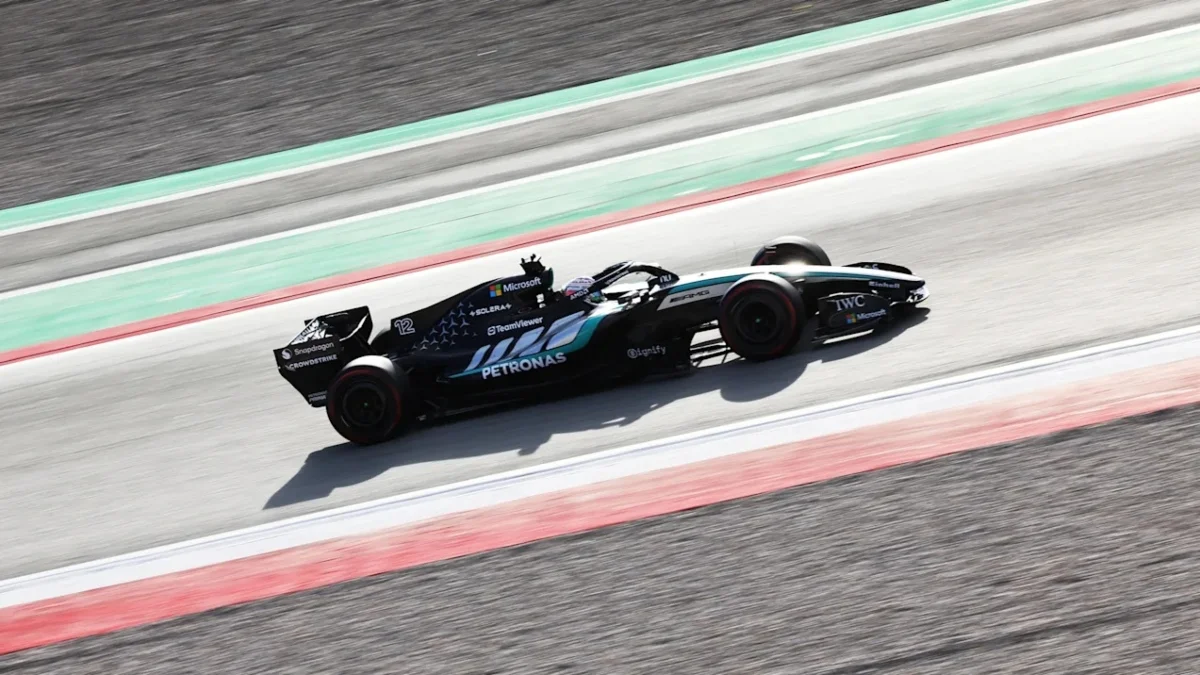

The Mercedes W17 has been designed under the all-new 2026 Formula One regulations, which mandate a significantly smaller and lighter car. Compared to previous generations, the W17 is narrower and shorter, improving agility and responsiveness in slow and medium-speed corners.
The minimum car weight for 2026 has been reduced to around 770 kg, including the driver, helping Mercedes focus on sharper handling. The compact chassis also improves energy efficiency, tyre management, and racing quality, especially on tight circuits.
Mercedes W17: Advanced Active Aerodynamics System
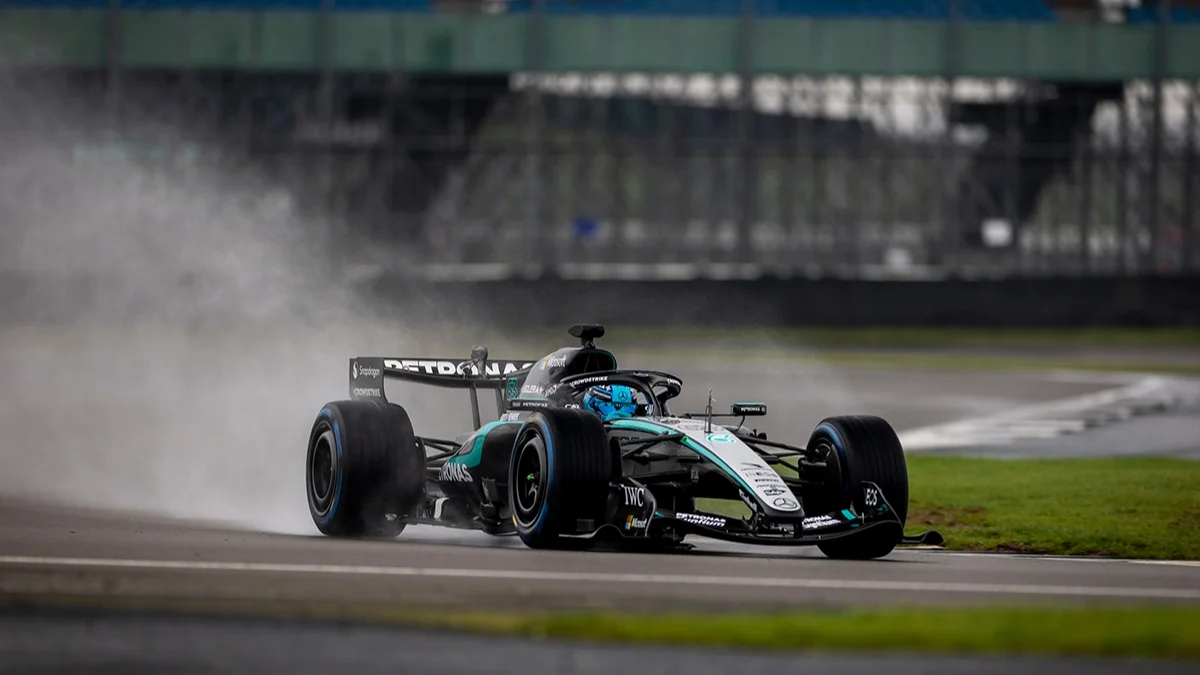
One of the defining features of the Mercedes W17 is the introduction of active aerodynamics. The car is equipped with movable front and rear wings that can switch between two modes depending on race conditions.
Read More

A high-downforce mode is used during cornering for improved grip, while a low-drag mode activates on straights to boost top speed and overtaking ability. This system replaces traditional DRS and plays a major role in reducing dirty air, making wheel-to-wheel racing closer and more competitive.
Mercedes W17: Next-Generation Hybrid Power Unit
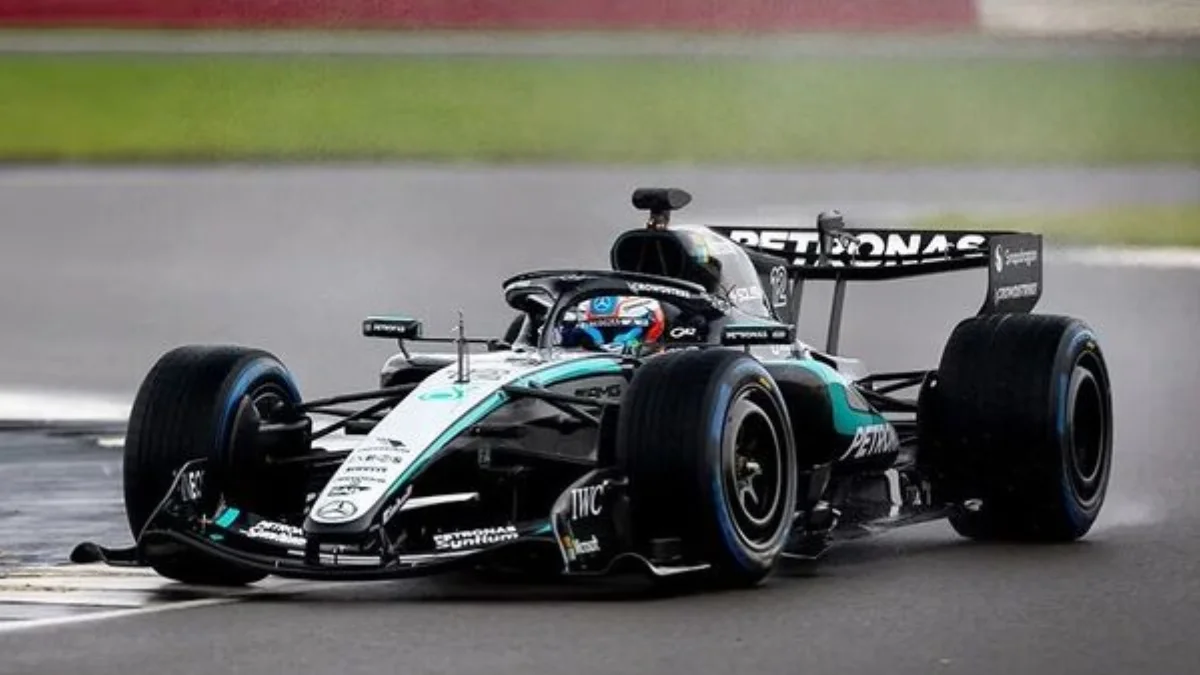
The Mercedes W17 is powered by a 1.6-litre V6 turbo hybrid engine developed for the 2026 era. A key change is the near-equal power split between the internal combustion engine and the electric motor, with roughly 50 percent of total output coming from electrical energy.
The MGU-H has been removed, while the MGU-K has become more powerful, delivering around 350 kW. This shift increases efficiency and emphasizes energy management throughout a race.
Mercedes W17: 100 Percent Sustainable Fuel Technology
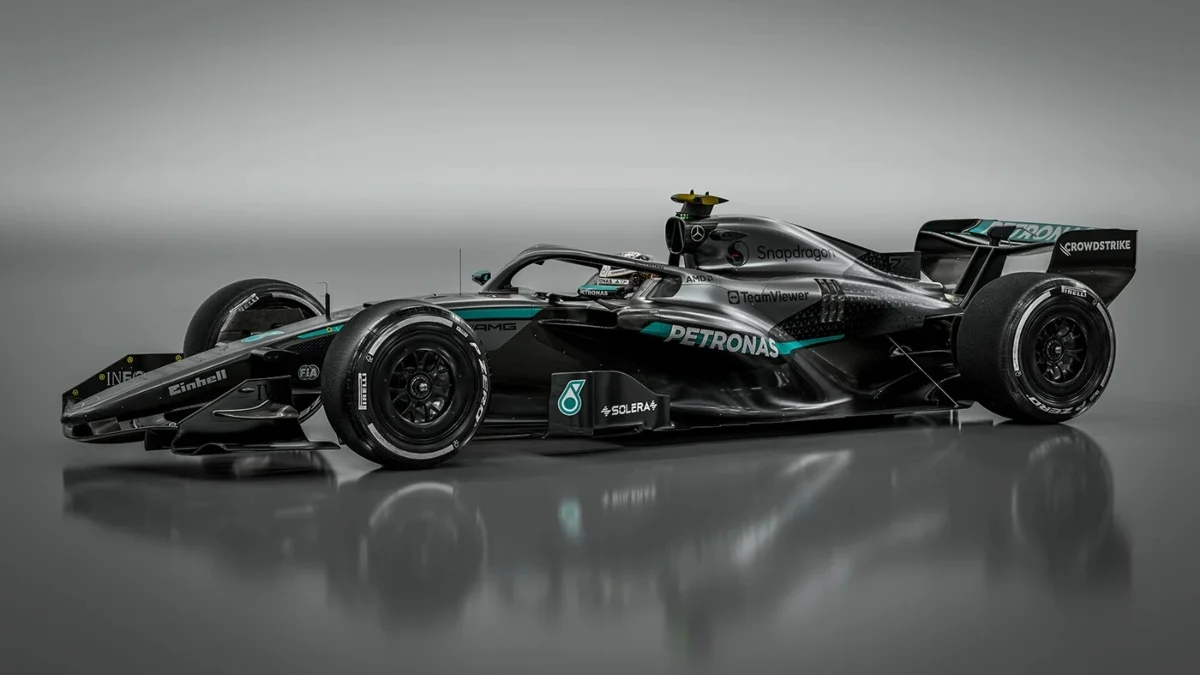
Sustainability is central to the Mercedes W17 project, as the car runs exclusively on advanced sustainable fuel. This fuel is designed to be carbon-neutral, produced using non-fossil sources while maintaining the performance levels required in Formula One.
Mercedes and its fuel partners have focused on ensuring high energy density, efficient combustion, and reliability. The use of sustainable fuel allows the sport to reduce its environmental impact while keeping the traditional internal combustion engine relevant beyond 2026.
Mercedes W17: Revised Suspension and Mechanical Layout
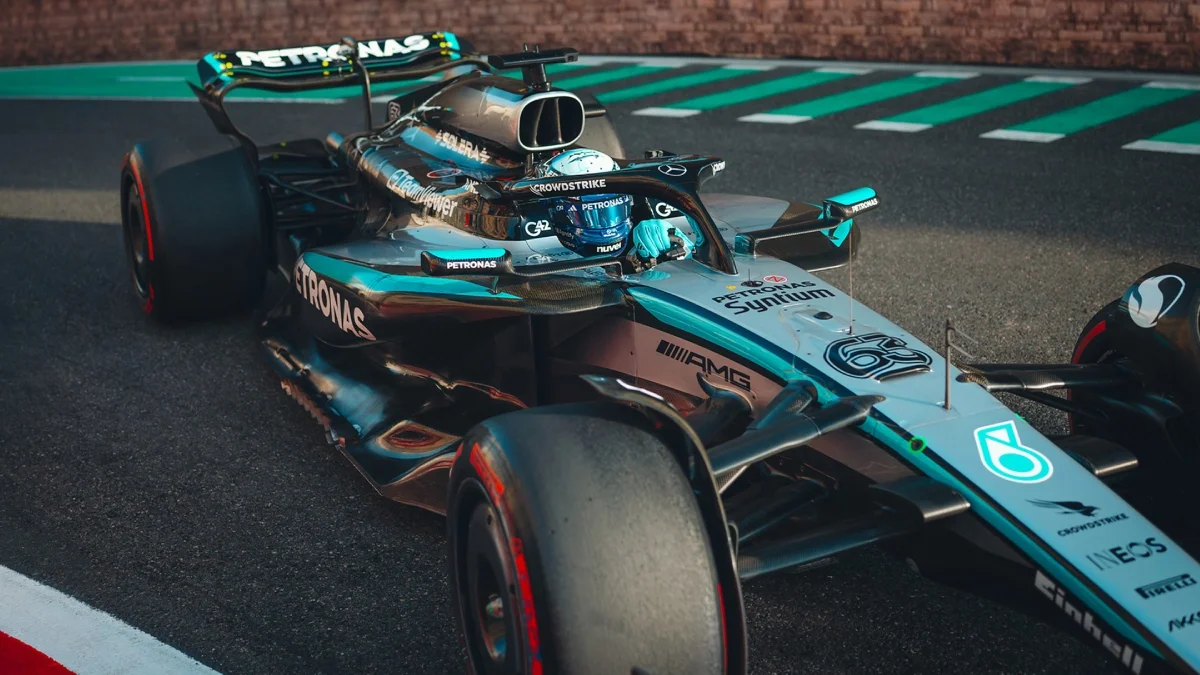
The Mercedes W17 features a refined suspension layout optimized for the new aerodynamic philosophy. The team continues to use a pushrod front suspension, prioritizing weight reduction, aerodynamic packaging, and mechanical consistency. With reduced ground-effect dependency in the 2026 rules,
Read More

The suspension plays a larger role in maintaining tyre contact and stability. The mechanical setup is designed to work seamlessly with the active aerodynamics, ensuring predictable handling, better tyre life, and improved driver confidence over long race distances.
ALSO READ: How Rich Is R Ashwin in 2026? Net Worth Breakdown