
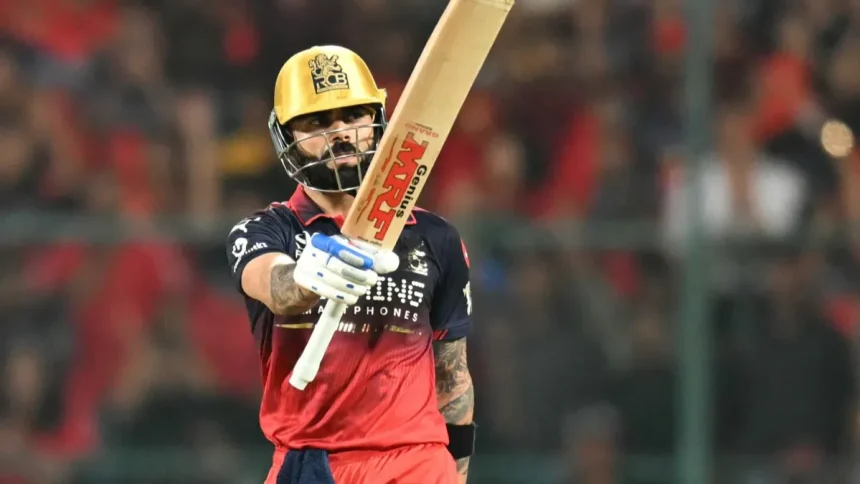
There is something unmistakably magnetic about Virat Kohli whenever the Indian Premier League rolls around. In IPL 2026, that magnetism has turned into a full-blown debate. Virat Kohli is scoring runs, yet questions persist about impact, tempo, and match-defining moments. For a player whose standards have always been extraordinary, even a strong season can spark scrutiny.
A Run Machine Under the Microscope: Virat Kohli’s Numbers
On paper, Virat Kohli’s IPL 2026 numbers hold firm. He continues to anchor innings, piling up consistent scores and maintaining an average that most batters would envy. His ability to control the powerplay and transition into the middle overs remains intact.
However, modern T20 metrics have reshaped how performances are judged. Strike rate, boundary percentage, and impact per ball now weigh heavily. While Virat Kohli’s aggregate runs remain impressive, critics point to phases where acceleration appears delayed. This contrast between volume and velocity is central to the debate.
Virat Kohli and the Strike Rate Question
The discussion around Virat Kohli inevitably circles back to strike rate. In IPL 2026, teams are pushing scoring rates beyond traditional benchmarks, often targeting 200-plus totals as standard rather than exceptional.
Virat Kohli’s approach, rooted in stability and calculated risk, sometimes clashes with this aggressive template. While he ensures fewer collapses, detractors argue that the evolving T20 landscape demands constant pressure on bowlers. Supporters counter that without Virat Kohli’s anchoring presence, batting lineups risk becoming volatile.

The Role Evolution: Is Virat Kohli Adapting Enough?
Virat Kohli is no longer just a run-scorer. He is a senior figure tasked with balancing aggression and responsibility. In IPL 2026, this dual role has intensified scrutiny.
There are visible attempts from Virat Kohli to adapt. He has introduced more intent during the powerplay, occasionally stepping down the track early to disrupt bowlers. Yet, the transition is not absolute. His natural game still leans toward building innings rather than explosive bursts.
This raises a tactical question. Should Virat Kohli fully reinvent his style, or should teams construct lineups that complement his strengths
Read More

Impact in Match-Defining Moments
Another layer to the Virat Kohli debate in IPL 2026 is situational impact. In high-pressure chases and crunch overs, expectations from Virat Kohli are disproportionately high. Every innings is assessed not just by runs scored but by when and how those runs come.
There have been innings where Virat Kohli has anchored chases to perfection, guiding his team with precision. Yet, there are also instances where acceleration in the final overs has been questioned. In a format where finishing power is prized, this aspect continues to fuel discussion.
Virat Kohli vs The New Generation
IPL 2026 has seen an influx of fearless young batters who play with a high-risk, high-reward approach. Their ability to clear boundaries from ball one has shifted audience expectations.
Virat Kohli, by contrast, represents a more classical T20 evolution. His game is built on timing, placement, and calculated aggression. The comparison with younger players often becomes unfair, yet unavoidable.
This generational contrast is not about superiority but about stylistic divergence. Virat Kohli’s consistency offers reliability, while emerging players provide volatility and explosive returns.
Fitness, Experience, and Longevity
One area where Virat Kohli remains unmatched is physical conditioning. Even in IPL 2026, his running between the wickets, fielding intensity, and overall fitness levels set benchmarks.

This athletic edge allows Virat Kohli to convert singles into twos and maintain pressure without relying solely on boundaries. It also ensures longevity, enabling him to remain a central figure in discussions year after year.
Experience further amplifies his value. Virat Kohli reads game situations with clarity, often adjusting his tempo based on match context rather than external expectations.
Team Dynamics and Tactical Usage
The debate around Virat Kohli is also shaped by team strategy. Batting position, partner roles, and overall lineup composition influence how his innings are perceived.
When paired with aggressive openers or finishers, Virat Kohli’s anchoring role becomes more valuable. Conversely, when the lineup lacks firepower, his cautious phases appear more pronounced. IPL 2026 has highlighted this dependency. Virat Kohli’s effectiveness is closely tied to how well the team structure supports his style of play.
The Weight of Legacy
Few players carry the legacy that Virat Kohli does. Every performance is measured against his peak years, where he redefined batting standards in the IPL.
This legacy is both an asset and a burden. Even a strong season can feel underwhelming when compared to his own past brilliance. The debate is less about decline and more about expectation management. Virat Kohli continues to deliver, but the lens through which he is viewed remains unforgiving.